Blog

Day: January 12, 2025

What is the Difference Between Recycled and Non-Recycled Janitorial Paper?
Janitorial Paper
admin

What is the Difference Between Recycled and Non-Recycled Janitorial Paper?

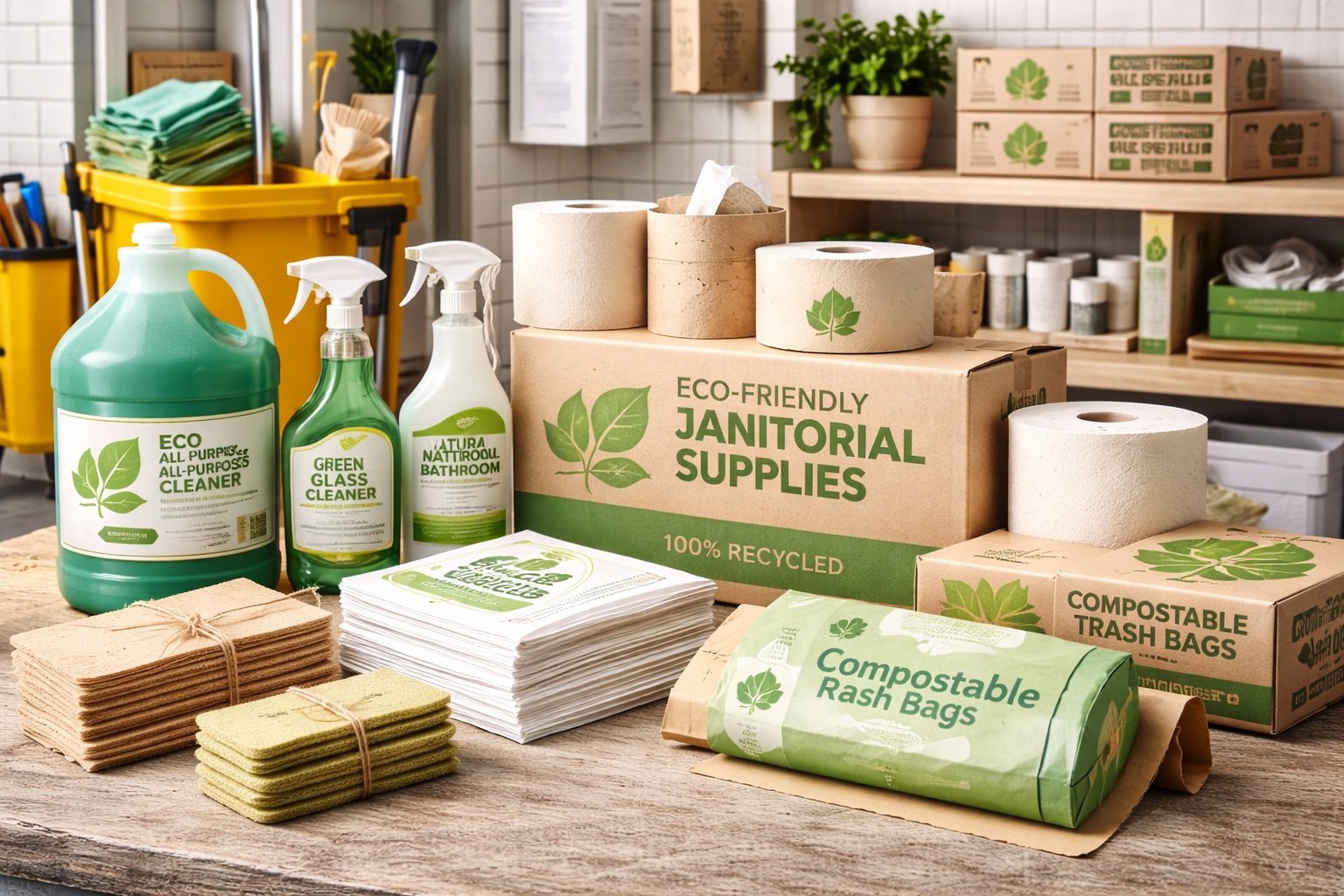
Difference between recycled and non-recycled paper for janitorial use Janitorial paper is a critical component in maintaining cleanliness and hygiene across various industries, from office buildings to healthcare facilities. While often overlooked, the type of janitorial paper you choose—recycled or non-recycled—can have significant implications for the environment, cost, and overall sustainability. This blog examines the key distinctions between recycled and non-recycled janitorial paper, looking at the ecologically friendly options for janitorial paper, the value of recycled paper for commercial cleaning, and what non-recycled paper means to the environment. Eco-Friendly Janitorial Paper Options Eco-friendly janitorial paper choices are made in a way to reduce the footprint on the environment while maintaining high performance. Recycled paper products are mostly at the front of these choices, typically consisting of post-consumer or pre-consumer waste materials. Since paper waste can be diverted away from landfills and also reduce the dependence on virgin pulp, recycled janitorial paper helps save natural resources and energy. FSC, EPA Guidelines, and Green Seal are only a few certifications that ensure that such products conform to the very high environmental and sustainability standards of production, ensuring companies seeking to lessen their ecological footprint have a more reliable choice. Benefits of Recycled Paper for Commercial Cleaning There are various benefits that recycled janitorial paper has for commercial cleaning operations. For one, it helps in conserving the environment by lessening deforestation while minimizing energy-intensive processes related to virgin paper production. Modern day-products made of recycled paper are engineered to be just as effective as non-recycled paper products, providing strength and absorbency for different cleaning operations. In addition, companies that use recycled paper find it fits into the corporate social responsibility agenda and boosts their reputation among environmentally conscious consumers. Cost savings can also be realized, especially when purchased in bulk, making recycled paper a practical and sustainable option for commercial settings. Sustainability in Janitorial Paper Products Sustainability has become a priority in the janitorial supply industry, and janitorial paper products play a key role in achieving this goal. The production of recycled paper requires significantly less water, energy, and chemical processing compared to virgin paper. By using recycled paper, businesses contribute to waste reduction and lower greenhouse gas emissions, as paper that would otherwise end up in landfills is repurposed into functional products. Many companies are adopting sustainable janitorial paper products that require building certification but also help reduce the carbon footprint and appeal to stakeholders’ conscious approach toward a green environment. Sustainability in janitorial paper is no trend. It’s a vital step toward that greener future. Environmental Impact of Non-Recycled Paper Fresh wood pulp is used for non-recycled, or virgin paper. Non-recycled looks fresh and clean, yet its production at a significant cost to the environment. Manufacturing such paper contributes to deforestation which affects ecosystems and reduces the sequestration abilities of the Earth. Furthermore, virgin paper utilizes more energy and water than recycled paper. Chemicals used in bleaching and processing can be toxic to the environment surrounding the production site, making it another site of ecological degradation. In addition, non-recycled paper waste is significant in volume, often ending up in landfills, where it is a source of methane, an extremely potent greenhouse gas. While virgin paper has its place in certain applications, its use at large scale raises significant sustainability concerns. Cost Comparison: Recycled vs. Virgin Paper Products A common misconception is that recycled janitorial paper is significantly more expensive than virgin paper. However, advances in recycling technology and increased demand for sustainable products have narrowed the cost gap. Recycled paper may have a slightly higher upfront cost in some cases, but it often results in long-term savings through reduced disposal costs and potential tax incentives for adopting sustainable practices. On the other hand, virgin paper, while sometimes cheaper initially, incurs hidden environmental costs that can affect businesses in the form of regulatory penalties or in terms of their reputation. If taken into account are the direct costs and environmental factors, then recycling paper usually appears to be cheaper and more eco-friendly. Correct Janitorial Paper Selection Choosing the appropriate janitorial paper requires balancing the considerations of environmental responsibility, performance need, and budget. Businesses seeking to maintain the highest levels of sustainability have been looking to recycle paper products. They are designed to meet both ecological requirements and reliable performance expectations, and recent advances in this product category now offer excellent alternatives for most cleaning applications. For a reliable janitorial paper provider, The American Eagle Paper Company is an excellent provider that offers a whole range of options starting from traditional to green solutions. Strongly dedicated to sustainability, they present their consumers with products that will ensure the most preferred high-quality recycled paper in accordance with the requirements of environmental protection. This helps businesses to take good care of the environment and serve with the highest cleanliness standards.  
How is Computer Paper Different from Regular Printer Paper?
Computer Paper
admin

How is Computer Paper Different from Regular Printer Paper?

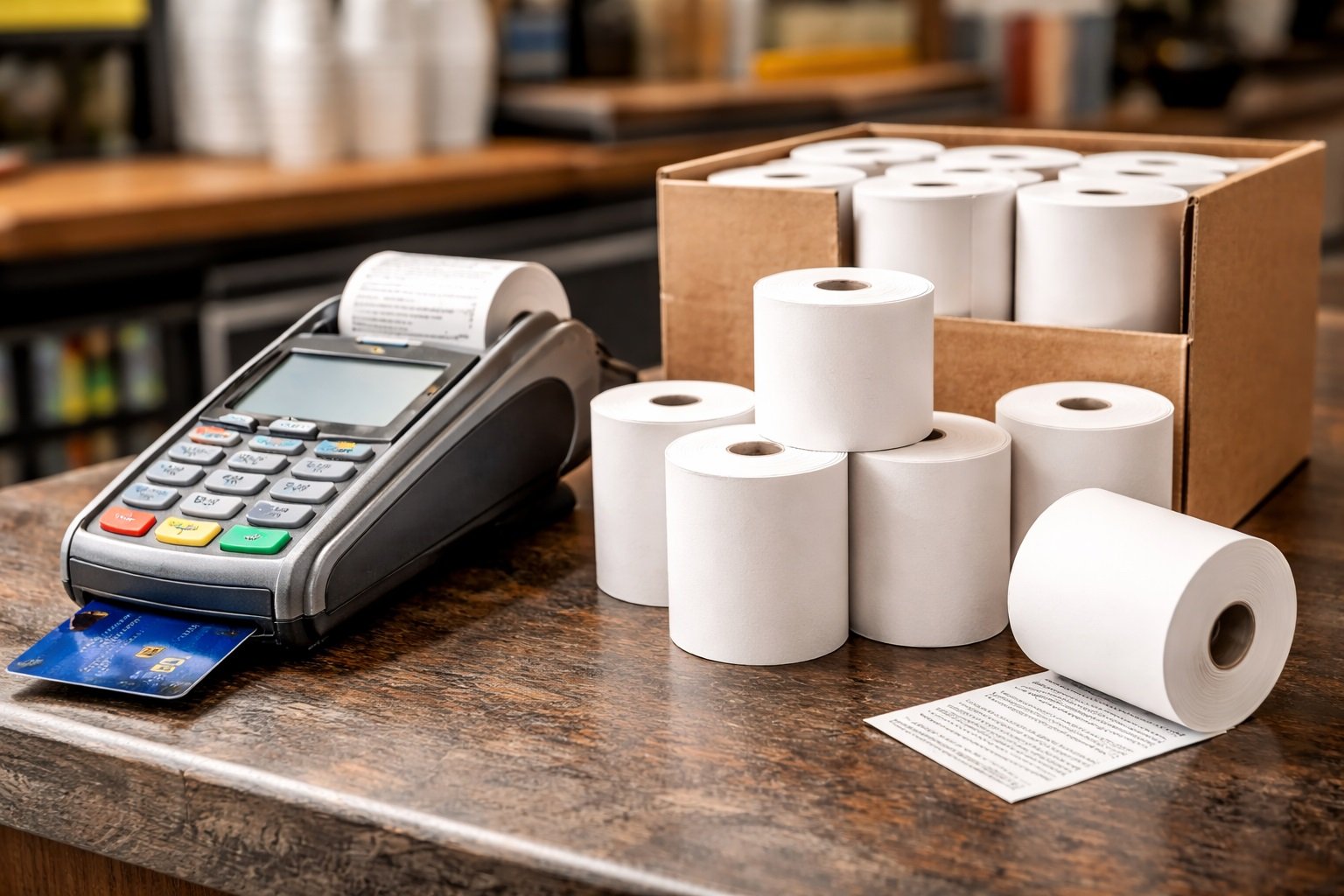
What is the difference between computer paper and regular printer paper? The category of printing calls for a definition of computer paper as it tends to come off as a technical specialty other than printer paper. Even though it shares the similarities, computer paper is actually for specific printing technologies and applications. Understanding these differences is crucial for businesses, organizations, and individuals who rely on printing for various needs. This blog explores the unique characteristics of computer paper, comparing it to regular printer paper across several dimensions, including continuous feed paper vs. cut-sheet paper, dot matrix printer paper characteristics, thermal printer paper comparison, multi-part forms for computer paper, and standard paper sizes for printing. Continuous Feed Paper vs. Cut-Sheet Paper Another big difference between computer paper and typical printer paper is that the former feeds differently into the printer. Typically, printer paper for inkjet and laser printers comes in sheet sizes: letter (8.5 x 11 inches), A4 (210 x 297 mm). This cut-sheet format is ideal for modern printers designed for high-quality, precise outputs. In contrast, computer paper is often continuous feed paper. Continuous feed paper, as the name suggests, comes in long rolls or perforated sheets connected end-to-end. This type of paper is designed for dot matrix printers and other legacy printing systems that require uninterrupted printing over extended periods. Perforations between sheets allow users to separate individual pages easily, while tractor-feed holes on the sides ensure seamless movement through the printer. The choice between continuous feed paper and cut-sheet paper largely depends on the printing technology in use and the intended application. Businesses handling high-volume printing, such as billing or inventory management, often prefer continuous feed paper for its efficiency and low cost per page. Dot Matrix Printer Paper Characteristics Computer paper is closely associated with dot matrix printers, a technology still widely used in specific industries. Dot matrix printer paper has unique characteristics that set it apart from regular printer paper. Perforated Edges: Dot matrix printers use a tractor-feed mechanism to pull the paper through. Tractor-feed holes along the edges of the paper ensure accurate alignment and prevent jams. Durability: This paper is often thicker and more robust than standard printer paper, allowing it to withstand the mechanical impact of dot matrix printing. Compatibility with Multi-Part Forms: Dot matrix printer paper is frequently used for multi-part forms (e.g., invoices or receipts) where multiple layers of carbon or carbonless paper are printed simultaneously. Thermal Printer Paper Comparison Thermal printers represent a completely different printing technology, often associated with point-of-sale systems, receipts, and labels. Thermal printer paper, unlike both computer paper and regular printer paper, is heat-sensitive and coated with a chemical layer that changes color when exposed to heat. While computer paper is designed for impact-based printing (dot matrix) or ink-based printing (inkjet/laser), thermal paper eliminates the need for ink altogether. This makes thermal printers compact, quiet, and efficient for applications like retail receipts and shipping labels. However, thermal paper has its limitations:Durability: Thermal paper prints can fade over time, especially when exposed to heat or sunlight. Cost: The specialized coating of thermal paper makes it more expensive than regular printer paper. Comparing thermal paper to computer paper points out how the printing requirements determine the choice of paper. For instance, though thermal paper is very good for retail, computer paper remains the best choice for industrial or legacy printing applications. Multi-Part Forms for Computer Paper One of the most distinctive features of computer paper is its compatibility with multi-part forms. Multi-part forms consist of multiple layers of paper, often separated by carbon or carbonless material, allowing a single print to create multiple copies simultaneously. Multi-part forms are widely used in: Invoicing: Businesses can create an original invoice and a duplicate copy in a single print run. Shipping: Packing slips and shipping labels often require multiple copies. Record Keeping: Industries like healthcare and logistics benefit from multi-part forms for maintaining physical records. Standard printer paper cannot replicate this functionality because modern inkjet and laser printers do not exert the mechanical pressure required to transfer impressions across multiple layers. Choosing the Right Paper for Your Needs It is very important to know the differences between computer paper and regular printer paper in choosing the right type. From continuous feed paper for your dot matrix printer, multi-part forms for business records, or thermal paper for receipts, each has its purpose. Computer paper evolved with advancing technology, yet its utility remains as imperative in those high-volume industries, which rely heavily on strong, precise, and durable printing solutions. It thus becomes vital to choose the appropriate paper for the printer and the application involved, ensuring optimal performance, cost-efficiency, and quality in your printing tasks. For those looking for a reliable supplier of computer paper, The American Eagle Paper Company offers a wide range of high-quality options to meet diverse printing needs. With a commitment to sustainability and exceptional service, they provide continuous feed paper, multi-part forms, and specialized sizes tailored to industrial and business applications. Trust The American Eagle Paper Company to fulfill your printing requirements with efficiency and excellence.