For a city like Philadelphia, where local businesses are embracing sustainability, food packaging for restaurants must rise above the ordinary takeout boxes.
Under the scrutinizing demands of eco-conscious diners, the hospitality sector has no choice but to prioritize purpose with functionality.
Eco-friendly food packaging is among the most preferred solutions that bring impactful changes in the ecosystem. Particularly, paper-based options featuring compostable, recyclable, and biodegradable materials are ultimately the most practical and responsible alternative to plastics.
Many restaurants collaborate with local mills and suppliers to develop innovative packaging designs and scalable solutions that meet their operational needs. This collaboration reduces the environmental footprint while preserving the quality and presentation of the food.
The guide highlights how food packaging Philadelphia has made deliveries easy while balancing durability, affordability, and environmental responsibility.
What are the Different Eco-Friendly Food Packaging Options?
Kraft Paper or Paperboards
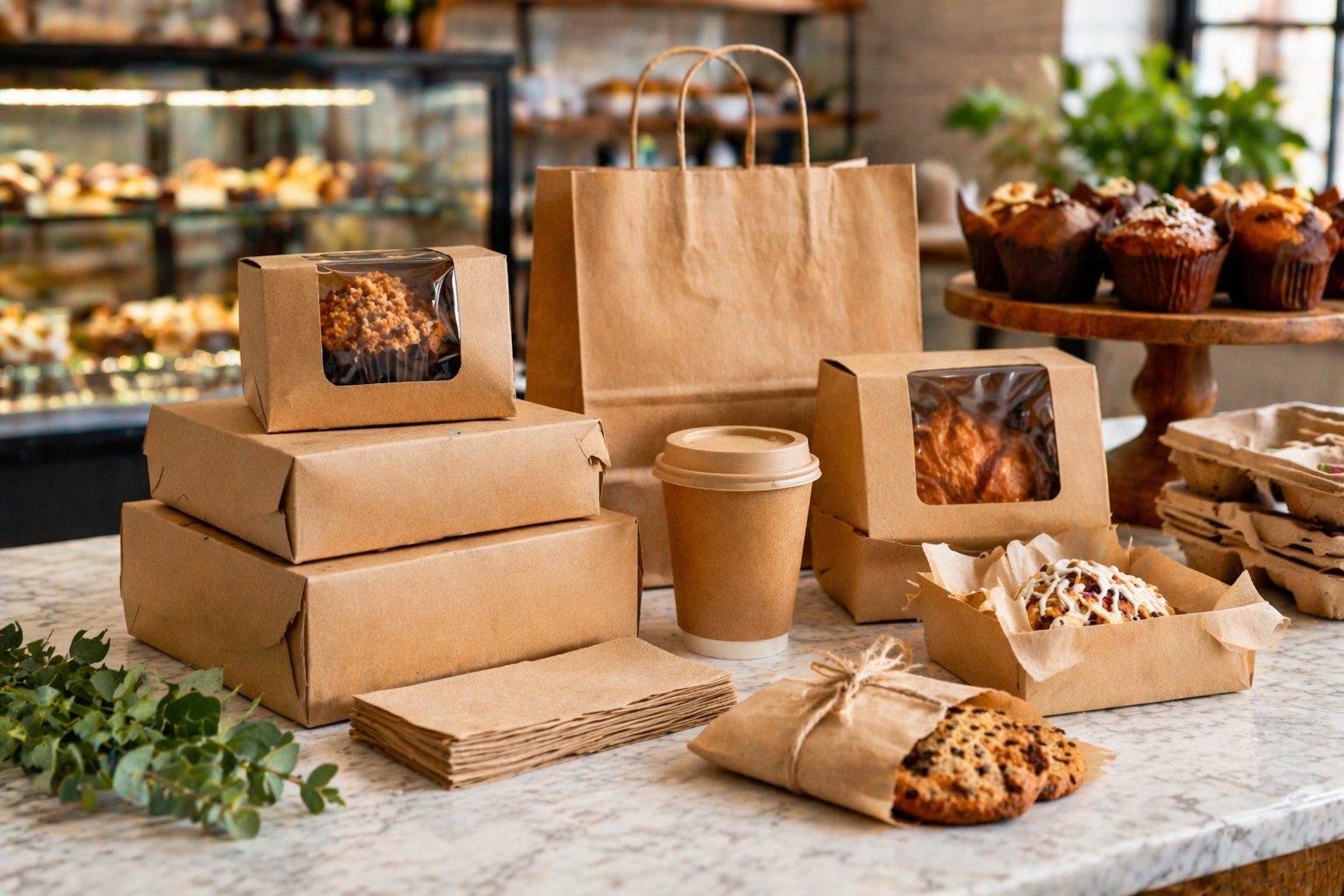
This type of sustainable food packaging for restaurants is made from post-consumer or post-industrial waste fiber. They are known for their grease and moisture-resistant characteristics.
However, their capabilities fall short when faced with heavily greasy or wet food. Some Kraft papers come with no coatings at all. They have high printability, are affordable, and suitable for holding dry foods, sandwiches, or bakery items.
Molded Fiber
The molded fibers are derived from recycled paper, cardboard, or agricultural residues, including feedstock. The pulp extracted is converted into sturdy containers, trays, and protective inserts that can handle hot or bulky foods.
However, molded fiber is not acceptable in curbside bins; rather, it should be composted by municipal programs or commercial setups. They are not microwavable and cannot tolerate moisture unless lined.
Bagasse Containers
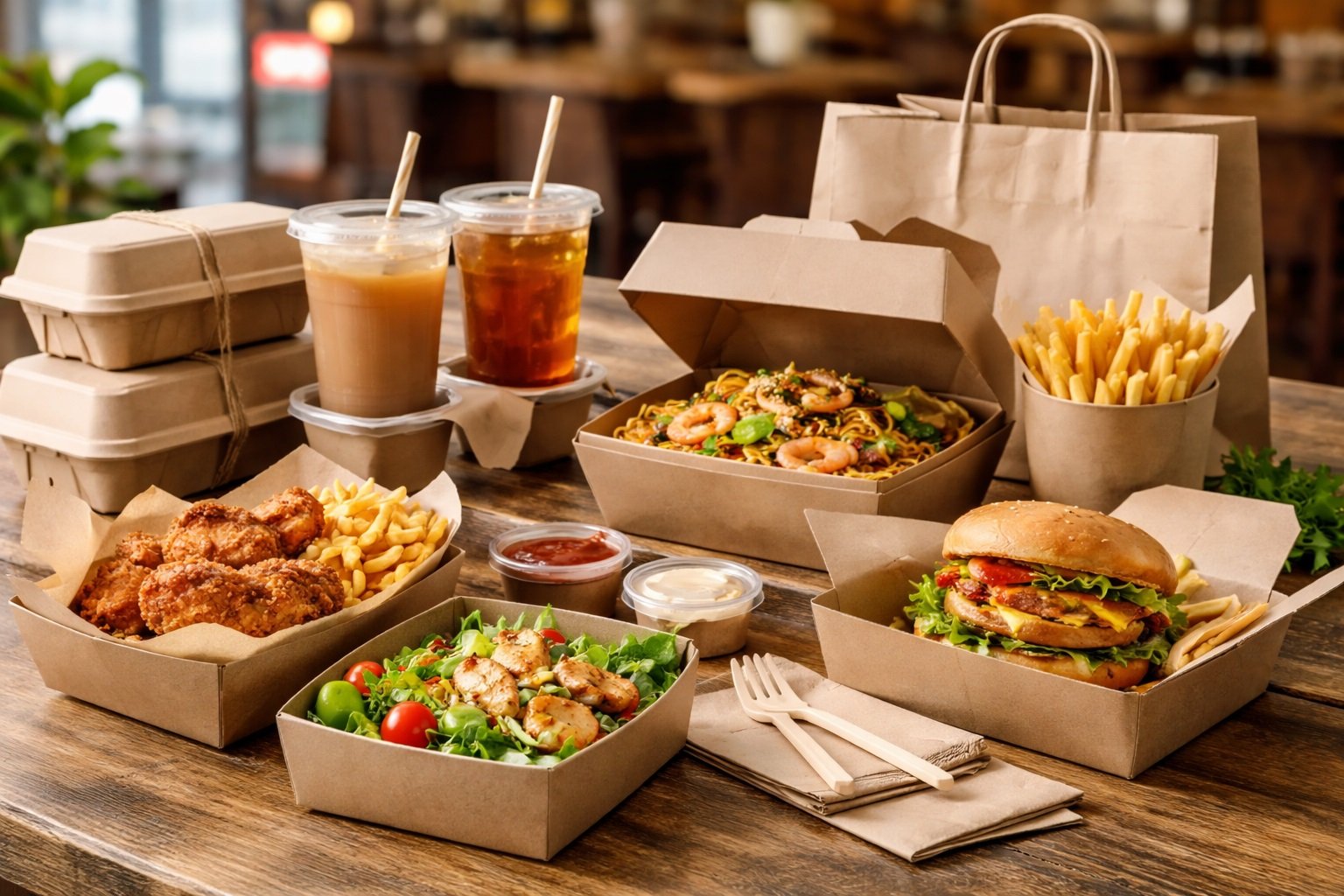
The main ingredient in this food packaging for restaurants is bagasse, a by-product of sugarcane. The pulp is made into durable plates, bowls, and clamshells. The container is ideal for hot entrees, messy foods, and full-course takeouts.
They require commercial compostable facilities and may cost more than plastic. Also, they may not be available in every region, and the quality of each supplier differs.
Bio-Based Liners
- Polylactic acid (PLA) or bioplastic is a plant-based plastic generally made from fermented corn starch or sugarcane
- They have a high tendency to hold liquids
- They are used in cups, salad bowls with clear lids, and see-through sandwich packages
- Bioplastics are designed to break down in industrial facilities
Wax or Water-Based Serviceware
Water-based coatings are a newer innovation that have increased resistance to oil and moisture. It is designed to remain recyclable and compostable in extreme conditions; however, they must be chosen carefully as they can disrupt recycling streams.
Why Restaurants Adopt Eco-Friendly Packaging?
Customer Expectations
Nowadays, diners, especially the younger crowd, are drawn to businesses whose operations are based on sustainability. Food packaging for restaurants is a way of showing their commitment to environmental responsibility.
Branding and Competitive Advantage
Over time, eco-friendly food packaging becomes part of the business’s narrative. It positively influences the brand’s image and attracts eco-conscious customers.
Additionally, these solutions encourage positive customer referrals and foster favorable engagement across digital platforms.
In crowded markets, sustainable food packaging Philadelphia grants diners the visibility they need to stand out among the vast pool of competitors.
Local Regulations
Many state and local governments have imposed bans on single-use food packaging Philadelphia. In situations of non-compliance, the responsible party will incur heavy fees and penalties.
In some jurisdictions, suppliers or retailers are being held responsible for the use of plastics, thus effectively compelling restaurants to opt for eco-friendly food packaging.
Cost Dynamics
There is an argument in the market that the per-unit cost of eco-friendly food packaging is higher than that of plastic counterparts. However, looking at it from a wider angle, the businesses can save through reduced waste fees and lower disposal expenses.
Furthermore, collaborating with local mills and suppliers, restaurants can save time, lower their transportation costs, and benefit from bulk-order discounts.
Operational Efficiency and Safety
The latest technologies are bringing innovations in eco-friendly food packaging. The modern designis leak-proof, easily stackable, and equipped with insulation to protect the food.
Such developments make the containers more delivery-compatible, reducing the chances of spills and complaints.
These innovations become part of the workflow once standardized, hence employees do not need to be specially trained for handling.
Environmental Impact and Accountability
Paper-based products, with their compostable and recyclable components, reduce greenhouse emissions and plastic pollution.
Additionally, the municipalities have introduced many waste collection and disposal initiatives. These programs greatly help restaurants meet sustainability goals by channeling the discarded materials away from landfills.
Supply-Chain and Local Economic Stability
Forming partnerships with local suppliers of eco-friendly food packaging leads to reliable supplies. There are fewer shipping delays, and suppliers readily customize sizes or prints even if the ordered quantity is less.
Furthermore, buying locally strengthens the community, deepens business relationships, and builds goodwill.
A Local Provider for Restaurants Supporting Sustainability
American Eagle Paper Company Inc. brings you reliable, eco-friendly food packaging that elevates your restaurant’s efficiency, presentation, and cleanliness. Our team of experts is here to cook up designs and streamline options that will give your business the competitive edge it needs to stand out in the market.