Blog

Author: admin

Are Traditional Plastic Containers Safe for Food Storage?
Traditional Products
admin

Are Traditional Plastic Containers Safe for Food Storage?

Are Traditional Plastic Containers Safe for Food Storage? Here’s What You Need to Know   Nothing in modern life feels as standard in a home as in a conventional plastic container. Their light weightiness, cheapness, and the ability to be used for virtually anything – from storing leftovers to keeping ingredients for meal preparation – make them seem to be just the thing. However, whether or not it is safe to store food in them has been a nagging worry for many health-conscious people. This blog will discuss the safety of the modern, regular plastic container, including its safety during food storage, food-grade plastic container safety, chemical leaching, and other risks associated with food storage in plastic. The Popularity of Traditional Plastic Containers Regular plastic containers have been popular mostly due to their usefulness as cost savings. Presently, many shapes, sizes, and designs are involved in solving the various storage problems. Even with these conveniences, the question then arises when the container is used for storing food for a prolonged period or under conditions. Understanding Food-Grade Plastic Container Safety The plastic containers are not all the same. There are those that are labeled “food-grade” or “BPA-free,” meaning that they have passed some standards in safety. A food-grade plastic container means that it was manufactured in such a way that it stored the food material without any risk of contamination or danger to health.Consumers are advised to look for food-safe certifications and labels when purchasing plastic containers. These labels often indicate that the product is free from harmful chemicals, such as Bisphenol A (BPA), which can leach into food and beverages under certain conditions. The Risks of Chemical Leaching in Plastic Containers One of the most significant concerns about traditional plastics containers are just potential conduits of chemical leaching. Certain plastics transfer toxins to food within them when high heat, such as that of a microwave or very hot liquid, is finally applied. Chemical leaching occurs in this manner.Chemical leaching is important mostly when acidic or fatty foods are stored, as this could even speed up the release of harmful substances. These types of containers are also more susceptible to leaching chemicals-the older or damaged ones, thus making it imperative to change them from time to time. Health Risks of Plastic Food Storage The health risks associated with plastic food storage largely stem from the chemicals that can leach into food and beverages. Prolonged exposure to these chemicals has been linked to a variety of health issues, including endocrine disruption, cancer risks, reproductive health issues, and immune system impairment.Endocrine disruptors, for instance, are such chemicals like BPA that may affect the hormonal balance in the human body and therefore could lead to problems in development, reproduction, and the brain. Some chemicals, such as styrene used in plastics, can increase cancer. Phthalates, often present in traditional plastic containers, have been linked to reduced fertility and other reproductive health concerns. Certain plastic additives can also impact the immune system, making the body more susceptible to illnesses. Safe Materials for Food Packaging For those wanting to reduce their risk of health risks, there are alternative safe food packaging and storage materials which can be considered instead of using the traditional plastic containers. The use of glass containers is considered as one of the best since it is hardy, non-reactive, and very easy to clean. Stainless steel containers are lightweight and long-lasting, ideal for both hot and cold foods. Food-grade silicone is a flexible and heat-resistant material that is free from harmful chemicals. Container made of food-safe grade material would allow for safe storage of food and liquids. BPA-free plastic storage options minimize the risks associated with traditional plastic but maintain the convenience. As one selects any storage material, one should ensure it is food-safe and for the desired use. Tips for Using Plastic Containers Safely If you decide to use traditional plastic containers, there are steps you can take to minimize potential health risks. Avoid heating plastic containers unless they are explicitly labeled as microwave-safe, and discard any containers that are cracked, scratched, or discolored, as these are more likely to leach chemicals. Always check labels for food-grade or BPA-free certifications and consider using plastic containers for short-term storage rather than long-term use. Additionally, avoid storing acidic or oily foods in plastic containers, as these can accelerate chemical leaching. Conclusion Plastic containers are such a big source of convenience as their use ranges from bottled water to takeaways, consumed or might still be processors of chemical leaching making informed choices for the preservation of one’s health. Whether you’re storing leftovers or prepping meals, prioritizing safe materials for food packaging is a step toward a healthier lifestyle.  

Are Fiber-Based Containers Truly Sustainable?
Fiber-Based Containers
admin

Are Fiber-Based Containers Truly Sustainable?

Are Fiber-Based Containers Truly Sustainable? Let’s Unpack the Truth In an era dominated by environmental concerns, businesses, and consumers are turning to more sustainable packaging options. Among these, fiber (biodegradable) containers have gained immense popularity. But the question remains: Are these containers truly as sustainable as they seem? Let’s look into the traits, advantages, and disadvantages of fiber-based containers to know their true effect on the environment. The Emergence of Fiber-Based Containers Eco-friendly packaging alternatives come in fiber containers, which consist of natural materials from wood pulp, bamboo, or agricultural by-products. Their biodegradable and compostable properties create a good reason to replace the long-scorned, traditional plastic packaging, which has been against the environment. As most consumers create a demand for environmentally friendly products, industries such as the food and beverage industry have taken it upon themselves to embrace sustainable food container materials like fiber-based materials. What Makes Fiber Containers Sustainable? This makes fiber containers different from plastic ones, which would take hundreds of years to break down. On the other hand, fiber containers break down in a few months when the conditions are right. Many fiber containers are recyclable, so the material will get a second life instead of being sent to a landfill. This promotes a circular economy, where resources are reused instead of being wasted. The raw materials used to create fiber containers, such as wood pulp or agricultural waste, are renewable. When sourced responsibly, these materials minimize the depletion of natural resources. The production of fiber-based containers generally produces fewer greenhouse gases compared to plastic. When renewable energy is used during the process, it is usually less harmful. In combination, these attributes make fiber containers a potential solution for reducing environmental harm. The Environmental Impact of Fiber Containers However, the sustainability of fiber containers is not without challenges; their benefits are undeniable. It’s essential to examine their full life cycle—from production to disposal—to understand their environmental impact. Sourcing raw materials like wood or bamboo can strain ecosystems if not managed sustainably. Overharvesting forests or monoculture bamboo farming can lead to habitat destruction, soil degradation, and biodiversity loss. Although fiber containers are generally less energy-intensive to produce than plastics, their manufacturing still requires significant energy and water. Employing renewable energy and water recycling systems can mitigate these impacts. While fiber containers are biodegradable, they require specific conditions to break down effectively. Composting facilities are not universally available, and if these containers end up in landfills, they decompose anaerobically, producing methane, a potent greenhouse gas. In addition, contamination from food or liquids can make fiber containers not recyclable, limiting their potential to be reused. Are Fiber-Based Containers a Viable Solution? Fiber containers represent a significant step in reducing the reliance on non-renewable and harmful materials like plastic. However, their sustainability is contingent on several factors. Ensuring that raw materials are harvested sustainably is crucial. To fully leverage the advantages of fiber-based containers, strong composting and recycling systems must be in place. Investments in such infrastructure may improve the performance of biodegradable and compostable packaging. Educating consumers on appropriate disposal methods is essential. For example, communicating to users that some fiber containers are compostable only in industrial facilities can prevent them from being mistakenly thrown into regular trash bins. Advances in material science can improve the functionality of fiber containers while reducing their environmental footprint. For example, creating containers that are both grease-resistant and compostable can increase their usability in various sectors. The Future of Sustainable Packaging Alternatives The increase in demand for alternative eco-friendly packages is where future sustainable packaging can be shaped through fiber-based containers. However, fiber containers don’t cure it all. They need to be combined with other materials in sustainable food containers and must have a major investment in refined waste management systems to make a real positive difference. In addition, businesses need to take a broader view considering the whole lifecycle impact of their packaging. By doing so, they can ensure that their shift to fiber-based containers genuinely contributes to reducing environmental harm. Conclusion Fiber (biodegradable) containers are indeed a promising substitute for traditional plastics. Their characteristics, being recyclable and made from renewable materials, put them in a very competitive position in the struggle against pollution and climate change. Their sustainability, however, will depend on how responsibly they can be sourced, disposed of properly, and further innovated. As we progress, embracing a multi-faceted approach to sustainable packaging alternatives will ensure that fiber containers live up to their potential as eco-friendly solutions.  

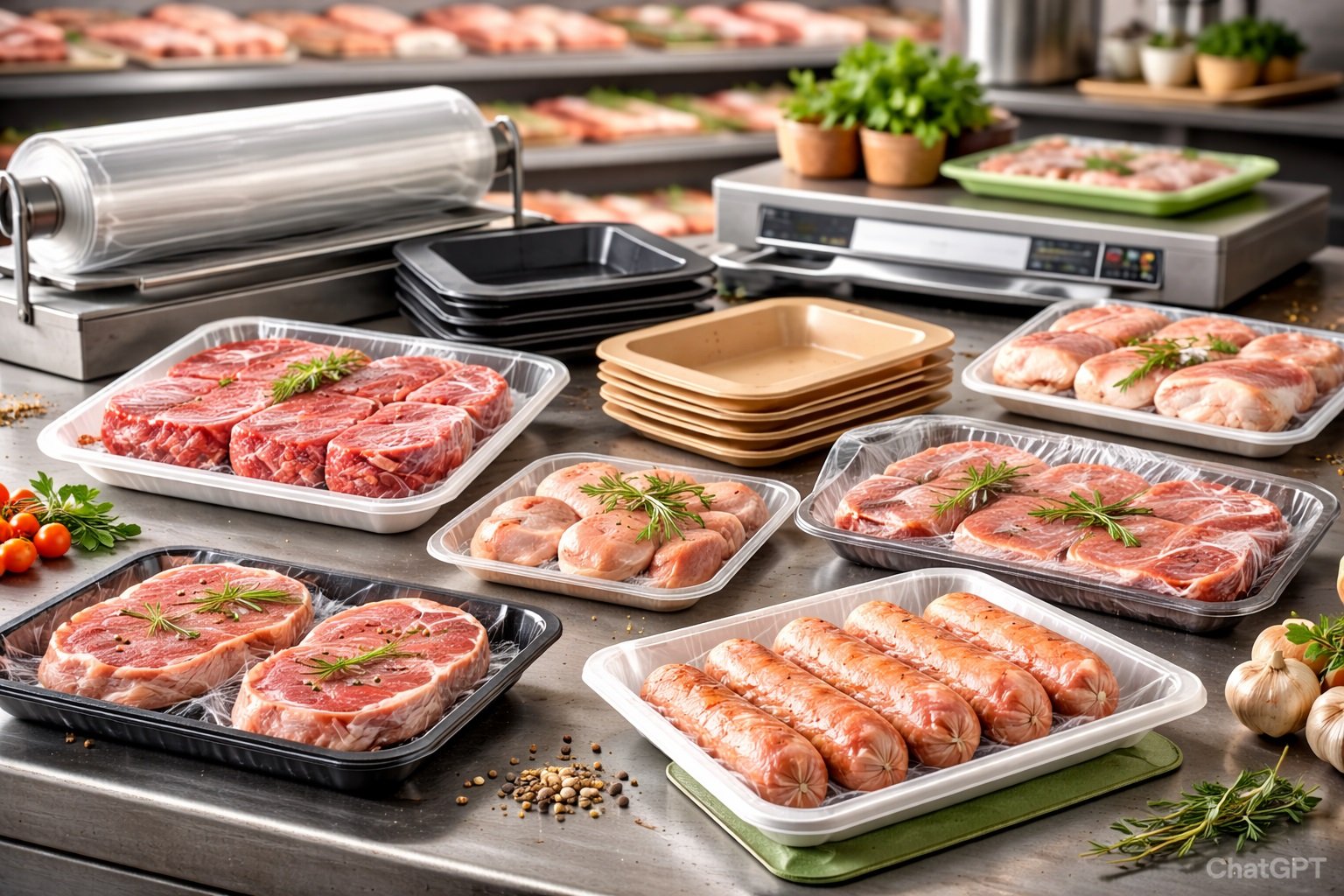
Image of meat trays and film wrap, showcasing options for purchasing packaging supplies for meat storage and presentation.
Meat Trays
admin

Where Can I Buy Meat Trays and Film Wrap?

Where to find film wrap for meat packaging When it comes to packaging fresh meat, poultry, and seafood, having the right supplies is essential to ensure product safety, freshness, and presentation. Meat Trays & Meat Film Wrap are the go-to options for preserving the quality and appeal of these perishable items. Whether you’re a butcher, a supermarket owner, or a home cook, finding reliable sources for meat trays and film wrap is crucial. This blog explores where you can buy these packaging essentials and highlights some useful tips to get the best deals. Wholesale Meat Trays and Film Wrap For businesses that need large quantities of packaging supplies, wholesale is the way to go. Buying wholesale meat trays and film wrap ensures one has a steady supply and saves a good amount of money. Wholesale distributors usually cater to food industries. There, people get massive meat packaging materials from wholesalers at a significantly reduced rate. Most wholesalers carry a great deal of merchandise, such as foam and plastic meat trays of multiple sizes and colors, clear meat film wrap, which is long-lasting and suitable for sealing tight, and trays specifically designed to accommodate seafood, poultry, or ground meat. Most wholesale merchants offer both internet and storefront orders, so it’s easy to decide which form of purchase would best suit your needs. Local Meat Tray Suppliers Near Me If you are facing an emergency meat tray and wrappings need, then the easy solution is a search for nearby suppliers of a meat tray to you. Some local suppliers have these materials; you can observe the quality before taking them. You can use tools like Google Maps for a quick search or rely on word of mouth by asking fellow business owners or local butchers for recommendations. Buying from local suppliers can save on shipping costs and reduce delivery times, which is especially useful for small businesses. Online Stores for Meat Film Wrap To enjoy wider access and more convenience when it comes to meat film wrap and trays. There are so many e-commerce sites and specialized websites that sell such products. Online shopping is also widely known for availing of the maximum number of choices, its customer review portion which provides real-life assessments on quality, simple price comparisons, and delivery straight to the doorstep. Bulk Meat Packaging Materials for Businesses Generally used by restaurants and supermarkets, processing plants need the majority of meat packaging supplies due to the daily demand for packaging of bulk meats. Buying in large quantities decreases the unit price considerably and ensures an uninterrupted supply. Look for packaging companies that offer customized bulk orders tailored to your requirements of the enterprise, large volume discounts, and subscription facilities for regular delivery. Many wholesale suppliers also market eco-friendly alternatives such as biodegradable meat trays for businesses promoting sustainability. Cheap Meat Trays and Wraps It really gets hard for those customers who have a budget to find cheap meat trays and wraps without compromising on the quality of the meat trays and wraps. You can do some window shopping and research on an online and offline supplier so that you can find one who sells his products at the most affordable price. Seasonal sales, clearance sales, and bulk discount sales are some other means you can save. Get some generic brands, as they usually do as good a job as branded products. Joining buyer groups or working out something with some other small businesses to do bulk purchases and cost-sharing will save even more.Affordable prices don’t necessarily mean you receive a low-quality product in terms of quality. The materials must be durable and food safe so as to keep the food at the right temperature for it to stay fresh enough to consume within a reasonable time period and present an attractive look for the customer to purchase. Buying Plastic Meat Trays In purchasing plastic meat trays for sale, there are important factors to consider. First, ensure that the size and shape of the trays match the dimensions of the products you will be putting inside. Verify that the material is food-grade, durable, and appropriate for refrigerating or freezing. Some of the other designs you may need include absorbent pads to absorb the extra moisture and keep the meat fresh as well as pleasing to the eyes. Quality trays, combined with tight film wrapping, help ensure that the texture of the product is maintained without contamination, which will be sure to please your customers. Conclusion Whichever the case might be, it is possible for business owners to acquire efficient packaging solutions for meats, and those individuals who buy meat trays & meat film wrap. You are going to look for wholesale distributors, online shops, and many more local vendors selling materials depending on your needs and budget, quality, compare prices, or even take any deal that avails you as much as bulk purchases. From here, getting the right packing supplies, you can enhance the shelf life and presentation of your meat products, ensuring customer satisfaction and food safety.  

Illustration of a stack of pizza boxes with a price tag, symbolizing the cost of pizza box production and pricing analysis.
Pizza Boxes
admin

How Much Does a Pizza Box Cost?

Where to buy cheap pizza boxes When you think about pizza, you likely focus on the crust, toppings, and melted cheese. Yet, there’s another crucial component that plays an essential role in delivering your favorite slice to your doorstep: the humble pizza box. If you are a pizzeria owner, a food entrepreneur, or simply interested in knowing how pizzas get delivered, their cost matters. So, here’s how the crucial factors that determine pizza box cost and explore the options available in the market. Pizza Box Cost: The Basics The price of a pizza box can vary significantly depending on several factors, including the type of box, material, size, design, and quantity ordered. On average, the cost of a standard pizza box ranges from $0.25 to $1.50 per piece. For small-scale orders, the pizza box price per piece will generally be on the higher end of this spectrum, while larger, bulk purchases often come with significant discounts. The price of a pizza box will depend on so many factors. For instance, it may range from the size of the pizza box, type of material used, size, design, or the number of pizzas ordered. Average prices for a standard pizza box run between $0.25 and $1.50 per piece. Generally, small-scale orders usually attract higher price per piece as opposed to bigger bulk purchases where there are major discounts. Bulk Pizza Box Pricing Bulk orders are the best option for pizzerias or restaurants that need a large quantity of pizza boxes. Bulk pizza box pricing tends to reduce the cost per unit, and some suppliers offer as low as $0.10 to $0.30 per box for several thousand units. Businesses can save money and maintain a steady supply of packaging materials by purchasing in bulk. Cost of Custom Pizza Boxes Custom pizza boxes are a great way to enhance brand visibility and create a memorable experience for customers. However, the cost of custom pizza boxes is generally higher than standard boxes. Depending on the complexity of the design, materials, and order size, custom boxes can cost between $0.50 and $2.00 per piece. For businesses looking to establish a strong brand identity, the investment in This will make custom boxes well worth the extra expense. Cheap Pizza Boxes: Are They Worth It? Cheap pizza boxes may be very attractive to a business that wishes to cut expenses, but they must also take into account their quality and durability. Low-quality boxes are typically made of cheap, thin material or recycled paper, which can make them not suitable for the weight of a pizza or for maintaining heat. Such problems could lead to a negative customer experience, which might harm a brand’s reputation. Therefore, striking a balance between cost and quality is crucial. Average Cost of Pizza Boxes When evaluating the average cost of pizza boxes, several factors come into play, including the type of box and the volume ordered. For small businesses that order standard boxes in moderate quantities, the average cost usually ranges between $0.30 and $0.60 per box. Large chains or businesses will pay less when they order in bulk, and custom designs or eco-friendly options will cost more. Comparative Analysis of Pizza Boxes Price This is one of the essential price comparisons that businesses do to get the best value when it comes to pizza boxes. Various suppliers will have different structures for pricing according to order size, material, and customization options. By comparing quotes from various vendors, a business can easily identify the best combination of price and quality. Additionally, online marketplaces and wholesale suppliers often provide discounted rates, particularly for repeat customers. Discounted Pizza Box Prices Many suppliers offer discounted pizza box prices for large orders, seasonal promotions, or first-time buyers. These discounts can range from 5% to 20% off standard prices, depending on the supplier and the size of the order. These deals can be availed of by businesses in order to lower costs without compromise on quality. Factors Affecting Pizza Box Costs Several factors determine the total cost of pizza boxes. The material used to make the box can be a significant factor in the price; boxes made from recycled or eco-friendly materials are usually more expensive than standard cardboard options. The size of the box also determines the cost, as larger boxes require more material and are therefore more expensive. The design of the box, especially if it includes custom logos or branding, will increase the production cost. In addition, the quantity ordered can significantly impact the price since bulk orders usually have huge discounts. Lastly, the supplier selected—whether an online wholesaler, or international manufacturer—may impact both the price and quality of the boxes. How to Choose the Right Pizza Box Supplier The most important factors to consider when choosing a pizza box supplier are quality, price, and customization. Quality comes first since boxes that withstand heat well and don’t break during delivery are crucial. Price also plays a role in that comparing prices from different vendors helps businesses select the best value. Suppliers that offer inexpensive customization options should be considered when one wants to stand out. If environmental impact is a factor, it’s wise to pick suppliers that can offer eco-friendly packaging solutions. Finally, a supplier that offers guaranteed delivery times would ensure that no stock runs out of stock during the peak business hours. Conclusion Knowing what factors affect pizza box prices and exploring options like bulk purchasing, wholesale suppliers, and custom designs, businesses can find the perfect balance between quality and cost. Whether you’re a small pizzeria or a large chain, investing in the right pizza boxes is an essential step toward delivering an exceptional customer experience.  

What is the Difference Between Recycled and Non-Recycled Janitorial Paper?
Janitorial Paper
admin

What is the Difference Between Recycled and Non-Recycled Janitorial Paper?

Difference between recycled and non-recycled paper for janitorial use Janitorial paper is a critical component in maintaining cleanliness and hygiene across various industries, from office buildings to healthcare facilities. While often overlooked, the type of janitorial paper you choose—recycled or non-recycled—can have significant implications for the environment, cost, and overall sustainability. This blog examines the key distinctions between recycled and non-recycled janitorial paper, looking at the ecologically friendly options for janitorial paper, the value of recycled paper for commercial cleaning, and what non-recycled paper means to the environment. Eco-Friendly Janitorial Paper Options Eco-friendly janitorial paper choices are made in a way to reduce the footprint on the environment while maintaining high performance. Recycled paper products are mostly at the front of these choices, typically consisting of post-consumer or pre-consumer waste materials. Since paper waste can be diverted away from landfills and also reduce the dependence on virgin pulp, recycled janitorial paper helps save natural resources and energy. FSC, EPA Guidelines, and Green Seal are only a few certifications that ensure that such products conform to the very high environmental and sustainability standards of production, ensuring companies seeking to lessen their ecological footprint have a more reliable choice. Benefits of Recycled Paper for Commercial Cleaning There are various benefits that recycled janitorial paper has for commercial cleaning operations. For one, it helps in conserving the environment by lessening deforestation while minimizing energy-intensive processes related to virgin paper production. Modern day-products made of recycled paper are engineered to be just as effective as non-recycled paper products, providing strength and absorbency for different cleaning operations. In addition, companies that use recycled paper find it fits into the corporate social responsibility agenda and boosts their reputation among environmentally conscious consumers. Cost savings can also be realized, especially when purchased in bulk, making recycled paper a practical and sustainable option for commercial settings. Sustainability in Janitorial Paper Products Sustainability has become a priority in the janitorial supply industry, and janitorial paper products play a key role in achieving this goal. The production of recycled paper requires significantly less water, energy, and chemical processing compared to virgin paper. By using recycled paper, businesses contribute to waste reduction and lower greenhouse gas emissions, as paper that would otherwise end up in landfills is repurposed into functional products. Many companies are adopting sustainable janitorial paper products that require building certification but also help reduce the carbon footprint and appeal to stakeholders’ conscious approach toward a green environment. Sustainability in janitorial paper is no trend. It’s a vital step toward that greener future. Environmental Impact of Non-Recycled Paper Fresh wood pulp is used for non-recycled, or virgin paper. Non-recycled looks fresh and clean, yet its production at a significant cost to the environment. Manufacturing such paper contributes to deforestation which affects ecosystems and reduces the sequestration abilities of the Earth. Furthermore, virgin paper utilizes more energy and water than recycled paper. Chemicals used in bleaching and processing can be toxic to the environment surrounding the production site, making it another site of ecological degradation. In addition, non-recycled paper waste is significant in volume, often ending up in landfills, where it is a source of methane, an extremely potent greenhouse gas. While virgin paper has its place in certain applications, its use at large scale raises significant sustainability concerns. Cost Comparison: Recycled vs. Virgin Paper Products A common misconception is that recycled janitorial paper is significantly more expensive than virgin paper. However, advances in recycling technology and increased demand for sustainable products have narrowed the cost gap. Recycled paper may have a slightly higher upfront cost in some cases, but it often results in long-term savings through reduced disposal costs and potential tax incentives for adopting sustainable practices. On the other hand, virgin paper, while sometimes cheaper initially, incurs hidden environmental costs that can affect businesses in the form of regulatory penalties or in terms of their reputation. If taken into account are the direct costs and environmental factors, then recycling paper usually appears to be cheaper and more eco-friendly. Correct Janitorial Paper Selection Choosing the appropriate janitorial paper requires balancing the considerations of environmental responsibility, performance need, and budget. Businesses seeking to maintain the highest levels of sustainability have been looking to recycle paper products. They are designed to meet both ecological requirements and reliable performance expectations, and recent advances in this product category now offer excellent alternatives for most cleaning applications. For a reliable janitorial paper provider, The American Eagle Paper Company is an excellent provider that offers a whole range of options starting from traditional to green solutions. Strongly dedicated to sustainability, they present their consumers with products that will ensure the most preferred high-quality recycled paper in accordance with the requirements of environmental protection. This helps businesses to take good care of the environment and serve with the highest cleanliness standards.  

How is Computer Paper Different from Regular Printer Paper?
Computer Paper
admin

How is Computer Paper Different from Regular Printer Paper?

What is the difference between computer paper and regular printer paper? The category of printing calls for a definition of computer paper as it tends to come off as a technical specialty other than printer paper. Even though it shares the similarities, computer paper is actually for specific printing technologies and applications. Understanding these differences is crucial for businesses, organizations, and individuals who rely on printing for various needs. This blog explores the unique characteristics of computer paper, comparing it to regular printer paper across several dimensions, including continuous feed paper vs. cut-sheet paper, dot matrix printer paper characteristics, thermal printer paper comparison, multi-part forms for computer paper, and standard paper sizes for printing. Continuous Feed Paper vs. Cut-Sheet Paper Another big difference between computer paper and typical printer paper is that the former feeds differently into the printer. Typically, printer paper for inkjet and laser printers comes in sheet sizes: letter (8.5 x 11 inches), A4 (210 x 297 mm). This cut-sheet format is ideal for modern printers designed for high-quality, precise outputs. In contrast, computer paper is often continuous feed paper. Continuous feed paper, as the name suggests, comes in long rolls or perforated sheets connected end-to-end. This type of paper is designed for dot matrix printers and other legacy printing systems that require uninterrupted printing over extended periods. Perforations between sheets allow users to separate individual pages easily, while tractor-feed holes on the sides ensure seamless movement through the printer. The choice between continuous feed paper and cut-sheet paper largely depends on the printing technology in use and the intended application. Businesses handling high-volume printing, such as billing or inventory management, often prefer continuous feed paper for its efficiency and low cost per page. Dot Matrix Printer Paper Characteristics Computer paper is closely associated with dot matrix printers, a technology still widely used in specific industries. Dot matrix printer paper has unique characteristics that set it apart from regular printer paper. Perforated Edges: Dot matrix printers use a tractor-feed mechanism to pull the paper through. Tractor-feed holes along the edges of the paper ensure accurate alignment and prevent jams. Durability: This paper is often thicker and more robust than standard printer paper, allowing it to withstand the mechanical impact of dot matrix printing. Compatibility with Multi-Part Forms: Dot matrix printer paper is frequently used for multi-part forms (e.g., invoices or receipts) where multiple layers of carbon or carbonless paper are printed simultaneously. Thermal Printer Paper Comparison Thermal printers represent a completely different printing technology, often associated with point-of-sale systems, receipts, and labels. Thermal printer paper, unlike both computer paper and regular printer paper, is heat-sensitive and coated with a chemical layer that changes color when exposed to heat. While computer paper is designed for impact-based printing (dot matrix) or ink-based printing (inkjet/laser), thermal paper eliminates the need for ink altogether. This makes thermal printers compact, quiet, and efficient for applications like retail receipts and shipping labels. However, thermal paper has its limitations:Durability: Thermal paper prints can fade over time, especially when exposed to heat or sunlight. Cost: The specialized coating of thermal paper makes it more expensive than regular printer paper. Comparing thermal paper to computer paper points out how the printing requirements determine the choice of paper. For instance, though thermal paper is very good for retail, computer paper remains the best choice for industrial or legacy printing applications. Multi-Part Forms for Computer Paper One of the most distinctive features of computer paper is its compatibility with multi-part forms. Multi-part forms consist of multiple layers of paper, often separated by carbon or carbonless material, allowing a single print to create multiple copies simultaneously. Multi-part forms are widely used in: Invoicing: Businesses can create an original invoice and a duplicate copy in a single print run. Shipping: Packing slips and shipping labels often require multiple copies. Record Keeping: Industries like healthcare and logistics benefit from multi-part forms for maintaining physical records. Standard printer paper cannot replicate this functionality because modern inkjet and laser printers do not exert the mechanical pressure required to transfer impressions across multiple layers. Choosing the Right Paper for Your Needs It is very important to know the differences between computer paper and regular printer paper in choosing the right type. From continuous feed paper for your dot matrix printer, multi-part forms for business records, or thermal paper for receipts, each has its purpose. Computer paper evolved with advancing technology, yet its utility remains as imperative in those high-volume industries, which rely heavily on strong, precise, and durable printing solutions. It thus becomes vital to choose the appropriate paper for the printer and the application involved, ensuring optimal performance, cost-efficiency, and quality in your printing tasks. For those looking for a reliable supplier of computer paper, The American Eagle Paper Company offers a wide range of high-quality options to meet diverse printing needs. With a commitment to sustainability and exceptional service, they provide continuous feed paper, multi-part forms, and specialized sizes tailored to industrial and business applications. Trust The American Eagle Paper Company to fulfill your printing requirements with efficiency and excellence.  

What Materials Are Used in Reliable Green Packaging?
Green Packaging
admin

What Materials Are Used in Reliable Green Packaging?

Are there cost differences between traditional and green packaging materials? In an era where environmental concerns are becoming increasingly prominent, businesses and consumers alike are shifting towards sustainable practices. Packaging, in particular, has been under the spotlight due to its significant impact on waste generation. The importance of really reliable green packaging is no longer a choice; it is a necessity; knowing the materials that would be their effectiveness is as much essential. This blog discusses the various materials for efficacious green packaging in making that sustainable future. The Importance of Reliable Green Packaging Reliable green packaging refers to packaging solutions that are eco-friendly, sustainable, and capable of reducing the negative impact on the environment. Unlike traditional packaging materials like plastic, which contribute to pollution and are slow to degrade, green packaging focuses on using materials that are renewable, recyclable, compostable, or biodegradable. By adopting these materials, businesses can reduce their carbon footprint and appeal to environmentally conscious consumers. Sustainable Packaging Materials Reliable green packaging consists of sustainable packaging materials. They are obtained from responsible sources and often from renewable resources. Paper and cardboard, for example, are commonly used because they can be recycled and biodegradable. They are versatile, durable, and applicable to any form of packaging-from boxes to protective wraps. Glass is another sustainable material. It is 100% recyclable without losing quality, making it perfect for long-term use. Glass is heavier than other materials but is very strong and safe for packaging food, beverages, and cosmetics. Moreover, innovation in lightweight glass manufacturing is reducing its environmental impact. Eco-Friendly Packaging Options Novel applications have realized eco-friendly solutions other than raw materials; some promising innovations include plant-based plastics such as bioplastics. Derived from renewable sources, these include cornstarch, sugarcane, and potato starch. While they mimic the properties of conventional plastics, they break down more easily and have a smaller environmental footprint.   Biodegradable Packaging Materials Biodegradable packaging materials are meant to break into innocuous substances upon disposal in the correct environment. Polylactic acid (PLA), one of the bioplastics made from cornstarch or sugarcane, is readily used for compostable cups, trays, and containers. Taken under industrial composting conditions, all the products of these materials decompose within a few months, thus aiming to replace conventional plastics. There are various other materials, such as seaweed packaging, which are currently drawing attention in the name of a new approach to biodegradability. Seaweed is abundant, renewable, and decomposes quickly, making it a promising material for food wraps and pouches. Recyclable Packaging Solutions Recyclable packaging solutions prioritize materials that can be reprocessed and reused multiple times. Aluminum, for example, is one of the most recyclable materials available. It is lightweight, resistant to corrosion, and endlessly recyclable without losing its properties, making it an excellent choice for beverage cans, food containers, and more. Paper-based solutions, such as kraft paper not quite ready for composting yet, but corrugated cardboard itself, very recyclable. When less, or no plastic, coating is applied, these kinds of materials can, without difficulty, get back onto the production cycle. Clear labeling and consumer awareness would ensure proper recycling. Compostable Packaging Materials Compostable packaging materials undergo further processes from being just biodegradable. Unlike just breaking down, they also add nutrients to the soil while decomposing. Materials for creating compostable plates, bowls, and trays are most common: bagasse, an industrial byproduct of sugarcane processing. Bagasse is suitable for hot and cold items because it is heat-resistant and sturdy. A second example is cornstarch-based packaging. This material source is used to produce compostable cutlery, oil bags, and totally compostable containers. It has zero-totally toxic residue after disposal in composting facilities. Such items work perfectly within zero-waste objectives. Challenges in Adopting Green Packaging Materials Despite the numerous benefits, green packaging materials also have some drawbacks. It is costly; prices for sustainable materials tend to be on the higher side compared to the traditional ones. Another aspect is that the composting and recycling facilities were not available in most places. Consumer behavior also comes into play. People do not know how to properly dispose of green packaging materials. This diminishes pollution in the recycling streams or in poor composting. Firms have to invest in consumer education and be transparent about the packaging as well. The Role of Businesses in Promoting Reliable Green Packaging Businesses have a pivotal role in advancing reliable green packaging. By choosing eco-friendly materials Being exemplary in their trade, they demonstrate sustainable practices towards materials and endowment. The organization can make communications transparent about their materials used along with instructions in disposing of products, which calls for informed behavior from consumers. Among these companies, The American Eagle company is a committed firm towards delivering reliable green packaging solutions. They employ a combination of biodegradable, recyclable, and compostable materials and thereby cater to the wide-ranging needs of their clients in a manner that decreases environmental impact. The consistency by which The American Eagle remains focused on environmental sustainability helps reduce wastes but also supports a circular economy, where materials are reused and repurposed instead of being discarded. By choosing The American Eagle, businesses and consumers can contribute to a greener planet while enjoying high-quality packaging solutions. Businesses and consumers, then, would enjoy high-quality solutions in packaging under the umbrella of this great contribution for a greener planet. Conclusion The provision of reliable green packaging will be one step closer to making the future green. With businesses like The American Eagle leading the charge, the transition to sustainable packaging is becoming more achievable. Embracing these solutions today ensures a healthier planet for future generations.  

How are traditional products influencing modern fashion?
Traditional Products
admin

How are traditional products influencing modern fashion?

Examples of traditional influence in fashion Don’t your crocs resemble clogs? Or don’t you get mesmerized when you see paisley prints (Buta) on a tie, shirt, blazer, or even sweater? We are reminded of the indigenous culture because the culture never left fashion. Traditional products are incorporated into fashion in new and evolved ways every day, and that goes without saying that traditional products influence modern fashion. In fact, it raises a question; can fashion survive without traditional products? This article provides you with a deeper insight into the influence of traditional products on modern fashion. Cultural fashion fusion The blend of traditional and modern styles not only preserves the cultural heritage but also offers a unique and fresh outlook on fashion. Traditional products are all natural such as wool, silk, and pure cotton which are still in use today. Traditional designs are known for their intricacy and bold colors which when fused with the minimalistic designs of today make the attire pop. Following are some of the ways traditional products are being used in the contemporary styles. Incorporation of traditional fabrics Some fabrics are the signature of a nation. Take the example of Kante cloth, which is known to be used in the traditional African culture. But, when you see a T-shirt, scarf, or gloves made out of it, the entire concept becomes a breakthrough. Even in the city, Kente cloth gives off that tribal aura and adds to the color, which is always a fascinating look. When you hear Banarasi Silk, the first thing you probably think of, is the city of Banaras; The rich South Asian culture, royalty, and warmth. Traditional Banarsi Silk is used mostly in Sarees and worn on special occasions like weddings. Banarasi Silk is a symbol of wealth and luxury in South Asia. But, today this fabric is used in gowns, dresses, and even blazers. Take a look at Central Asian culture, and you will find out that Ikat which is a traditional dying technique often used on the silk fabric. Even, today this meticulous technique is used in almost all sorts of attire. From dresses to Sarees and formal wear, this technique, even though, time-consuming is highly esteemed for its intricate yet sophisticated patterns. Traditional jewelry in modern fashion Would you have imagined that the earrings that you might be wearing every day are similar to those worn by people around 5000 years ago or maybe even earlier? For instance, filigree earrings, necklaces, and bracelets have been a part of ancient glamour. Similarly, Kuchi Jewelry is the identity of Pashtun fashion. All these tribal and ethnic jewelry is styled with contemporary attire to add a traditional and intricate touch. Footwear carrying cultural heritage Did you know that the sneakers that are found today are heavily inspired by espadrilles? You might as well have noticed the similarity between modern ‘khussa’ and traditional Mojaris. Today, where materials used in the making of footwear are directed towards improving durability and producing ergonomically friendly designs, traditional products have proved to be non-negotiable in terms of sustainability and cultural preservation. Cultural fashion fusion In the ever-evolving fashion world, preserving culture and traditions has become challenging. Where we see contemporary designs taking over the fashion world, traditional fashion legacies are not so conspicuous and have become a rare sight. However, whenever cultural and folk techniques and styles do make it to the runway and in the markets, it is always a privilege. Today, the fusion of old and new is popular such as kimono jackets, saree gowns, and altered cheongsams. Final word Traditional products in their truest form are rare, however, it is also clear that they have shaped the fashion landscape. The profound and multifaceted influence of traditional products is evident in the enriched and diverse fashion concepts. Incorporating traditional techniques, materials, and designs is a way of preserving and honoring cultural diversity while embracing innovations. If traditional products are used righteously, we can create a more inclusive, ethical, and sustainable fashion industry.  

Where Can You Find High-Quality Catering Supplies at Affordable Prices?
Catering Supplies
admin

Where Can You Find High-Quality Catering Supplies at Affordable Prices?

How to find budget-friendly catering supplies? Running a catering business or organizing large events requires more than just culinary skills. The backbone of any successful event lies in the quality and reliability of the catering supplies you use. From elegant tableware to robust kitchen equipment, the right tools can elevate the experience for your clients. However, sourcing high-quality catering supplies at affordable prices can be challenging, especially with the vast array of options available in the market. If you’re searching for affordable catering supplies without compromising on quality, you’re in the right place. In this blog, we’ll explore the best places to find discount catering equipment, wholesale catering supplies, and the best deals on catering supplies, ensuring your business thrives while staying within budget. Online Wholesale Catering Supply Stores One of the easiest and most cost-effective ways to source catering supplies is through online wholesale stores. These platforms offer a wide range of products at competitive prices because they deal directly with manufacturers. By cutting out the middleman, you can get high-quality products at a significantly lower price. Many online retailers like Restaurant Store, Restaurant Depot, and Ka Tom Restaurant Supply are known for their large inventory and selection of products. Visiting these stores allows you to inspect the products firsthand, ensuring they meet your quality standards. Additionally, many local suppliers offer loyalty programs or bulk purchase discounts, further reducing costs. Building relationships with local suppliers can also lead to exclusive deals and early access to sales. Wholesale Clubs Wholesale clubs offer a wide range of catering supplies covering everything from disposable tableware to commercial kitchen appliances. These stores sell products in large quantities, which leads to lower costs per unit. Also, they often have seasonal deals and clearance sales giving you the chance to buy essentials at much lower prices. You need to pay for membership, but the money you save on wholesale catering supplies makes up for this cost. If you run a busy catering business, buying from wholesale clubs can save you a lot of money over time. Auctions and Liquidation Sales Auctions and Liquidation Sales You can find high-quality catering supplies at unbeatable prices at auctions and liquidation sales. When restaurants and catering businesses shut down, they often sell off their equipment and supplies at auction. These items are in good condition and sell for much less than their original price. If you go to auctions or keep an eye on online platforms, you might find some great deals on cheap catering equipment. Trade Shows and Expos Trade Shows and Expos Trade shows and expos are great places to network and find affordable catering supplies. The companies showing their products at these events often have special discounts and deals. Going to trade shows lets you look at products from many different sellers, bargain for better prices, and learn about new things happening in the industry. This is a prime opportunity to secure the best deals on catering supplies. Second-Hand Markets and Classifieds You can look up different platforms like Craigslist, Facebook and eBay which often list second-hand catering equipment and supplies. While these items may have been used, they are often still in excellent condition. Purchasing second-hand is an effective way to acquire high-quality equipment at a fraction of the cost. When buying second-hand, always inspect the items thoroughly and, if possible, test them to ensure they are in working condition. This approach allows you to build your inventory gradually without overspending. Direct from Manufacturers Direct purchasing from manufacturers can yield really significant savings when it comes to bulk orders. Most manufacturers will then provide bulk price purchases, and some have outlet stores selling their overstock or discontinued items at cheaper costs. Direct purchasing eliminates the added cost by retailers which would have made otherwise affordable catering supplies much more costly. Check with manufacturers on wholesale pricing or bulk discounts plus outlet locations. Building direct connections can mean tremendous price savings in the future and possibly priority access to new products. Government and Surplus Auctions Government and surplus auctions are the best-kept secrets when it comes to buying catering supplies. You’ll find government surplus kitchen and catering equipment regularly leaving the property through public auction. Most of these auctions are for superbly kept, but heavily discounted equipment items: hop on the bandwagon and save a little more on an already discounted piece of catering equipment for your new business. If you are searching for the best service that will elevate your event with catering supplies, you can rely on American Eagle as they will provide top-notch services that are affordable and eco-friendly. They provide black trays for catering supplies and disposable salad bowls in bulk , aluminum trays for catering wholesale to keep the food warm. American Eagle also stocks catering utensils wholesale, offering everything from forks and knives to serving spoons, all at competitive prices.  

What Are the Best Practices for Managing Kitchen and Janitorial Operations in Hotels?
Hotels packaging
admin

What Are the Best Practices for Managing Kitchen and Janitorial Operations in Hotels? 

What are effective strategies for managing kitchen and janitorial operations in hotels?   Efficiently managing kitchen and janitorial operations is essential for maintaining high standards of cleanliness, hygiene, and customer satisfaction in hotels. These operations significantly impact guest experiences, health, and safety, as well as the hotel’s reputation. Establishing hotel housekeeping best practices and nurturing a culture of excellence are critical to success. This blog focuses on key ways to optimize hotel kitchens and maintenance services. Establish Standard Operating Procedures (SOP) Standard Operating Procedures (SOP) are the standard basis for hotel kitchen management and maintenance operations. They provide step-by-step work instructions and ensure that all employees follow the same procedures. For kitchen operations, standard operating procedures may include guidelines for food handling, storage, preparation and waste management. Likewise, cleaning SOPs include cleaning methods, chemical usage, and safety procedures. Written SOPs make training easier, increase control, and reduce errors in daily operations. Increase employee training and development Regular training will familiarize employees with hotel cleaning and kitchen procedures. Training should include important topics such as hygiene and cleanliness, proper use of cleaning equipment and chemicals, kitchen equipment maintenance procedures, and emergency procedures such as firefighting and waste management. Investing in ongoing training not only improves performance but also creates a professional and engaged workforce. Implement Advanced Cleaning Technologies New equipment and technology help to make cleaning and cooking easier. This saves a lot of time and energy. Automation cleaning machines, such as vacuum cleaning robots and dish washers increase efficiency. Additionally, the bio-based detergents and disinfectants for cleaning purposes contribute to sustainability. IoT-enabled monitoring systems through sensors monitor the levels of cleanliness and cleaning equipment for efficient performance and high standards of cleanliness. Hygiene and food safety are highly vital Hygiene and food safety laws cannot be observed in a kitchen. Measures include using thermometers, preventing contamination and illness with raw and cooked foods isolated from each other, and maintaining inspections. When cleaning, most importantly, the touch surfaces and areas commonly used avoid spreading germs. Use of proper procedures keeps such facilities compliant and ensures safety around the guests. Schedule maintenance and inspection Preventive maintenance ensures that there is less damage and the work is carried out efficiently. In the kitchen, it should take care of the oven, refrigerator, and exhaust system. When it comes to cleaning equipment, checking equipment such as cleaning machines and mops ensures they are working and operating to the maximum extent. Pipes and electricity also have to be monitored to prevent interruptions. This extends the life of the equipment but also adheres to the standards of safety. Promote a culture of cleanliness Hygiene becomes the priority if a culture of cleanliness is instilled among staff. Personal hygiene practices such as handwashing are encouraged and immediate reporting and cleaning of spills or hazards make all the difference. Pride in keeping workspaces clean and organized is what staff will bring to the workplace and what will make guests satisfied. Cleanliness is an essential factor in the overall guest experience. When the hotel staff actually care about maintaining a clean environment, it makes all the difference for guests during their stay. A spotless room or a tidy lobby not only enhances comfort but also boosts the likelihood of positive reviews and repeat visits. Guests are more likely to return to a hotel and recommend it to others when they feel confident that hygiene standards are a top priority. This commitment to cleanliness can set a hotel apart in a crowded market, making it a place where guests can relax and enjoy their time without worry. Stay updated on the trends and regulations of the industry. Hospitality industries keep changing, with new technology and regulations coming into place from time to time. This means that there is always the need to stay informed regarding innovations in efficient hotel kitchen operations and janitorial practices, updates on health and safety guidelines, and sustainability initiatives. One may attend industry conferences regularly or subscribe to relevant publications. If the kitchen and janitorial operations are well managed in a hotel, there is no doubt, with proper maintenance, a hotel can perform at high levels. Whether it is in optimizing hotel cleaning practices or ensuring efficient hotel kitchen operations, focusing on these best practices ensures that your hotel remains a preferred choice for guests seeking comfort, safety, and quality service. If you are looking to learn about the best practices for managing kitchen and janitorial operations in hotels, choose American Eagle as they provide comprehensive solutions for hotel excellence by elevating your hotel’s efficiency and cleanliness.