
Poly vs. Nitrile: Choosing the Right Disposable Glove for Philly’s Food and Medical Industries
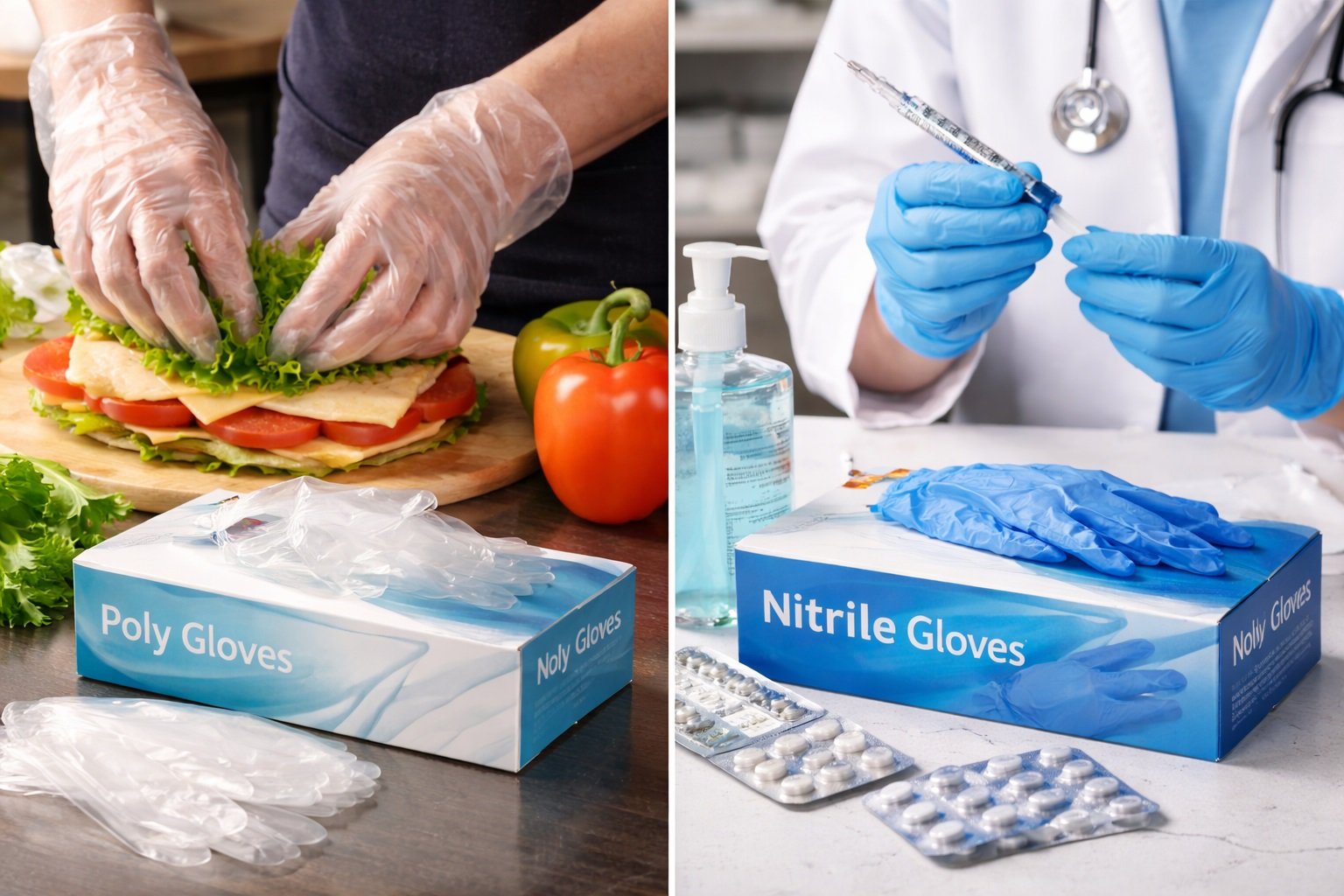
In Philadelphia, disposable gloves are part of daily life in both food service and healthcare. They may seem like a small item, but they carry a big responsibility. Disposable gloves help prevent the spread of germs, protect workers, and keep customers and patients safe. If you run a restaurant, manage a clinic, or purchase supplies for your business, you may compare nitrile gloves Philadelphia providers offer with wholesale poly gloves PA distributors supply. At first glance, these gloves may appear similar. In reality, they serve very different purposes. Understanding the difference can help you choose the right option for your workplace. A Closer Look at Poly Gloves Poly gloves are made from lightweight plastic. They are loose, clear, and very easy to put on and take off. That’s one reason people find them in fast-food places, cafeterias, and grocery stores. In busy kitchens, workers may change gloves many times each hour. That is one reason wholesale poly gloves are in high demand. They are affordable and designed for quick changes between tasks. Poly gloves work well for making sandwiches, handling baked goods, or serving ready-to-eat foods. They also help businesses maintain proper hygiene standards. These gloves are a popular choice for food businesses in Pennsylvania. They work well for daily tasks. They are best for simple, low-risk work without sharp tools or strong chemicals. Due to their thinness, they can break or tear with greater ease. They also fit in a way that can make careful or detailed work more challenging. For basic food handling and brief use, poly gloves are a smart and affordable choice. Comparing Strength and Purpose The main difference between poly and nitrile gloves is the level of protection. Poly gloves are best for simple, short tasks. They are cheap and easy to switch, so they work well for busy food service jobs. Nitrile gloves are stronger and more durable. That’s why hospitals and clinics in Philadelphia trust them for safety. They provide better resistance against punctures, oils, and cleaning solutions. Cost also plays a role in the decision. Many businesses buy wholesale poly gloves PA suppliers sell when they need a lot at a lower price. Nitrile gloves cost more upfront. Yet, they offer better strength and protection for tough jobs. What Works Best for Philly’s Food Industry Philadelphia’s food scene has it all. You can find small family-owned restaurants and big food production factories. Every workplace has its own needs. For fast-paced food preparation and serving, poly gloves are often sufficient. They meet hygiene requirements and are easy to change between tasks. Many businesses also rely on food grade gloves Pennsylvania food safety standards recommend to ensure safe food handling practices. In situations where employees handle raw ingredients, sharp tools, or heavy cleaning products, nitrile gloves may be the better choice. Some food businesses keep both glove types available so staff can select the right option for each task. What Works Best for Philly’s Medical Industry Healthcare environments require a higher level of protection. Preventing contamination and protecting both patients and staff is essential. That is why nitrile gloves are commonly used in hospitals, clinics, and laboratories. They are a standard item in the bulk medical supplies many Philadelphia healthcare providers rely on every day. Because nitrile gloves offer better durability, chemical resistance, and barrier protection, they are far more suitable for medical settings than poly gloves. Poly gloves are generally not used for direct patient care because they do not provide the same level of protection. Final Thoughts Choosing between poly and nitrile gloves is not about deciding which one is universally better. It is about selecting the right glove for the job. For light food service tasks, poly gloves can be a practical and budget-friendly solution. For medical care, food processing, and other higher-risk tasks, nitrile gloves offer the added protection many workplaces need. Working with a reliable supplier can make that decision easier. American Eagle Packaging Co supports Philadelphia’s food and medical industries with dependable disposable glove options for a wide range of workplace needs.