Blog

Tag: Green Packaging

The Butcher’s Guide to 2026 Packaging Optimize Meat Trays & Film Wraps for Shelf Life
Meat Trays
ahmer

The Butcher’s Guide to 2026 Packaging: Optimizing Meat Trays and Film Wraps for Shelf Life

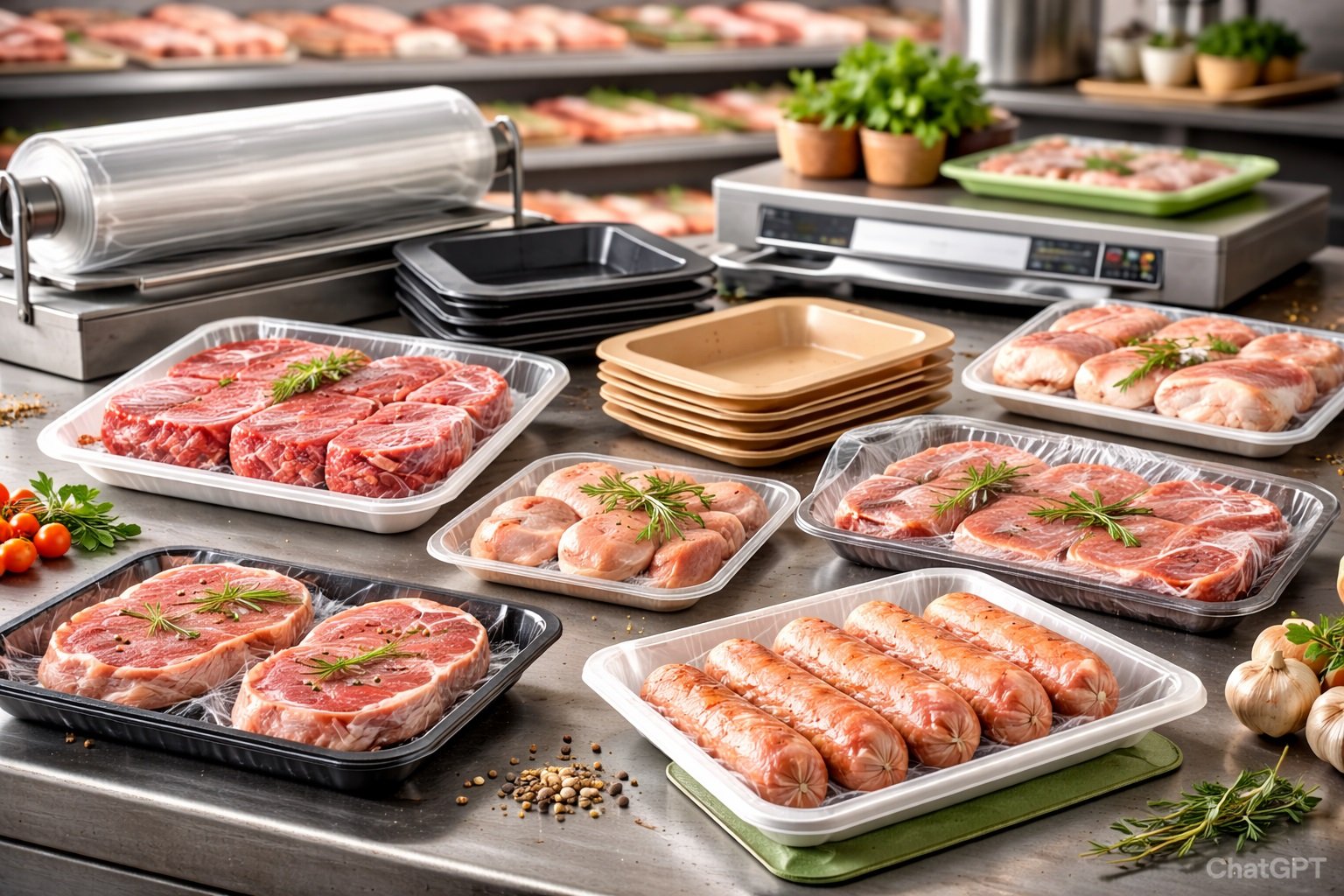
Are you losing profits to “brown-out” before your prime cuts even hit the Saturday morning rush? In the high-stakes world of Philadelphia meat retail, details matter. The difference between a premium sale and a “manager’s special” markdown often comes down to the microscopic science of your packaging. As we navigate tighter margins and higher consumer expectations in 2026, sourcing high-quality bulk food packaging Philly is key. Butchers rely on it to maintain that perfect “cherry-red” bloom and support longer shelf life. For local butchers, the tray and the wrap are just as important as the knife and the saw. Whether you run a historic stall in Reading Terminal Market or a high-volume processing facility in South Philly, packaging is critical. It’s the only barrier between your product and the oxidizing effects of the atmosphere. Choosing the Right Meat Trays The tray is more than just a pedestal for your protein; it is a moisture-management system. In 2026, the industry has shifted away from “one-size-fits-all” solutions. Modern wholesale meat trays Philadelphia providers now offer a variety of materials designed for the specific metabolic needs of different meats. High-Oxygen Barrier Trays For beef, maintaining that bright red color (oxymyoglobin) is essential. High-performance trays help control oxygen exposure, preserving the desirable red bloom while slowing oxidative discoloration. Absorbent Technology Excess “purge” or moisture at the bottom of a tray is a red flag for customers and a breeding ground for bacteria. When sourcing wholesale meat trays Philadelphia shops should look for integrated absorbent pads or “honeycomb” bottoms that trap moisture away from the meat. Structural Integrity Nothing ruins a brand reputation faster than a tray that buckles under the weight of a family-sized pack of chicken thighs. In our inventory of wholesale meat trays in Philadelphia that vendors trust, rigidity is a priority.  A tray that holds its shape ensures the film wrap remains taut, which is vital for the overall seal. The Science of Industrial Film Wraps If the tray is the foundation, the film is the atmosphere. The term “bloom” refers to the bright red color that beef takes on when exposed to oxygen. However, too much oxygen leads to spoilage, and too little leads to unappealing purple hues. This delicate balance is why choosing the right industrial film wraps PA specialists provide is a technical necessity. Modern PVC and Polyolefin films are engineered with specific “Oxygen Transmission Rates” (OTR). For 2026, the most successful butchers are using: Why Local Sourcing Wins In 2026, the “Just-in-Time” inventory model returned with a vengeance. Butchers cannot afford to have 500 lbs. of ground chuck ready to go with no trays to put them in. This is why a partnership for butcher supplies Pennsylvania residents can count on is a logistical game-changer. Our regional distribution model allows faster, more flexible fulfillment than national warehouse chains. Need a specific tray color or a non-standard film width? Sourcing butcher supplies locally Pennsylvania allows for more flexibility than “big-box” online retailers. We stay updated on the latest PA Department of Agriculture regulations, ensuring the butcher supplies Pennsylvania you purchase are always compliant with food-grade safety standards. 2026 Sustainability Standards for Philly Food Packaging Sustainability is no longer a “buzzword”; it is a line item in your compliance report. Philadelphia consumers are increasingly vocal about single-use plastics. However, in the meat industry, “going green” cannot come at the expense of food safety. The latest trends in bulk food packaging Philly include: By adopting bulk food packaging Philly, you do more than save the planet. You also build brand loyalty with eco-conscious shoppers. This is especially true in neighborhoods like Graduate Hospital and Northern Liberties. Reducing Shrink Through Packaging In the meat business, “shrink” (product loss) is the enemy of the bottom line. If a package of steaks reaches its “sell-by” date and has to be thrown out, that is pure profit down the drain. Investing in premium bulk food packaging Philly is an insurance policy against shrinkage. Better seals lead to fewer leaks. Better films lead to better color retention. Better trays lead to fewer damaged packages. When calculating the cost of high-quality packaging, think differently. Don’t see it as an expense. See it as the most effective way to protect your most valuable inventory. Partnering with the Pros The butcher shops that will thrive in 2026 are those that treat their packaging as a precision tool. From the specific OTR of your film to the structural grade of your trays, every detail matters in the quest for the perfect shelf-life. At American Eagle Paper, we are proud to be the premier source for wholesale meat trays Philadelphia and the surrounding regions. We provide the technical expertise and the reliable supply chain you need to keep your cases full and your customers coming back. Whether you need a fresh pallet of trays or a shipment of high-performance industrial film wraps PA, we are here to support your craft.


How Local Packaging Companies and Office Supplies Near Me Are Driving Green Innovation
Uncategorized
ahmer

How Local Packaging Companies and Office Supplies Near Me Are Driving Green Innovation

As environmental challenges intensify, sustainability has become a baseline for packaging companies and office supplies vendors. The society as a whole is actively seeking ways to reduce waste and lower carbon emissions. The green initiatives do not have to be as extravagant as installing solar panels, purchasing electric cars, or launching tree-planting campaigns. At times, it is as simple as rethinking ways of production, consumption, and reusing the essentials of daily life. Also, the efforts do not need to happen globally to stand out. Instead, partnering with local sustainable factories that provide packaging and office supplies near me suffices greatly. What Makes Innovation Green? This concept centers around the creation and implementation of products, processes, and models that reduce ecological impact. It is important to note that the responsible environmental balance is achieved without compromising value generation. To put it simply, eco-innovation is the practice of rethinking everyday consumables and transforming them into smarter, cleaner, and less wasteful choices. This initiative is widely seen in the fields of paper and office supplies near me. The paper mills are developing packaging materials that break down naturally to avoid landfill buildup. While business vendors are promoting products that are durable and can be reused and recycled. Additionally, sourcing from local providers instills a more powerful impact. Which Fundamental Elements Make Up Green Innovation? Planetary Gain It prioritizes curbing pollution, emissions, and waste to protect the planet from further deterioration. Efficient Use of Resources Within the framework of sustainable innovation, paper mills aim to minimize the reliance on energy, water, and raw materials. Material Recirculation System The eco-innovation follows a system that believes in reusing, recycling, and composting materials rather than disposing of them. It has substantially eliminated the concept of ‘use and throw.’ Compliance and Leadership The idea assists companies in meeting the environmental standards and promotes their sustainability credentials. The firm’s adherence and reputation pave the way for a leadership status in green alternatives. Market Appreciation As the customers have now become more aware of the impact of their choices, they are pushing towards eco-friendly options. Such innovations in products and services meet the demands of consumers while limiting the ecological footprint. How is the Green Initiative Changing the Packaging Domain? Transition Towards Eco-Friendly Materials Nowadays, packaging companies have shifted to renewable and biodegradable inputs. They include: Waste Management Through Innovation The local manufacturers are aiming to produce items that are efficient in nature. The design requires minimal layers of packaging, however retains its protective quality. The boxes, containers, and wraps encourage consumers to repurpose. To make recycling easier, the products have clear labeling for proper disposal. Closed Loop Production Under a closed-loop approach, the materials are collected, repurposed, and reintroduced into the market. This method conserves resources, decreases energy use, and lowers emissions associated with the production of new packaging. Guidance to Stakeholders For consumers who want to get into sustainable practices, packaging companies organize workshops and consultations. They also offer guidance to businesses on ways to reduce their ecological footprint. How are Office Supplies Near Me Innovating? Green Paper Products The traditional approach to paper-making vastly depletes water, energy, and timber resources. To address this issue, green innovations have put forward the notion of using post-consumer and post-industrial paper waste. Consequently, second-life notebooks, sheets, sticky notes, etc., are widely available in the market. Sustainable Writing Alternatives The most discarded items of office supplies near me are plastic pens and markers, which end up in the landfills. The solution lies in the use of biodegradable and refillable fountain pens and highlighters, as well as recyclable plastic writing instruments. Changes in Ink Cartridges As printer inks are also a hazard to the environment, eco-conscious companies are adopting soy-based inks and replaceable containers. Power-Saving Office Devices Apart from stationery and other office supplies near me, solar-powered calculators, rechargeable batteries, and smart outlet strips are among the green innovations. Minimalistic Workplace Culture “Be the change you wish to see in the world.” In light of such wisdom, many firms are adapting paper-free processes and virtual collaborative tools. They are also bulk purchasing office supplies near me. Why Choosing Local Makes a Difference? A Green Solution for All Stakeholders If you are on the lookout for a comprehensive paper supplier that fulfills your diverse business needs, American Eagle Paper Company Inc. is the right spot for you. We are among the innovative and eco-friendly packaging companies that will take your brand to new heights.

Why Smart Businesses Are Switching to Green Paper Products From Office Use to Packaging
Green Packaging
ahmer

Why Smart Businesses Are Switching to Green Paper Products: From Office Use to Packaging

In an era of climate change, pollution, and resource depletion, sustainability is more than a buzzword—it’s a business necessity. Companies across all industries are reevaluating their systems and supply chains. They’re searching for ways to reduce their environmental impact without sacrificing profitability. One of the easiest yet most effective changes is switching to green paper products. Whether using eco-friendly office paper or sustainable packaging, companies are aligning practices with environmental values. This shift benefits the planet, boosts brand reputation, and fosters customer loyalty. Green Paper Products Reflect a Shift in Company Culture and Consumer Expectations Sustainability is no longer reserved for large corporations. Today, businesses of every size must take environmental responsibility seriously. Consumers now expect it. They prefer brands that demonstrate eco-conscious values, not just in words but in action. One concrete step is the adoption of green paper products. Traditional paper production often involves deforestation, harmful chemicals, and high energy use. In contrast, sustainable paper options—such as recycled office paper, soy-based inks, and responsibly sourced materials—offer an environmentally sound solution without compromising quality. Eco-Friendly Office Paper: Rethinking Paper Use in Modern Workspaces In today’s workplace, paper is still in demand, even with the advancement of electronic documentation. From reports and presentations to memos and meeting notes, computer paper remains a daily necessity. But the kind of paper companies use can make a big difference. Recycled, sustainably made computer paper consumes less natural resources, produces less carbon in the production process, and frequently originates from post-consumer waste, keeping paper out of landfills. Furthermore, these environmentally friendly choices work just as well in printers, copiers, and fax machines. Wherein the past, a few may have worried about the texture or quality of recycled paper, contemporary green paper items are almost indistinguishable from their traditional counterparts. Indeed, numerous paper businesses have made large investments in innovation to enhance the function and looks of sustainable paper. Consequently, companies that make the change to environmentally friendly paper products not only lower their carbon footprint but also prove that they care about being socially responsible and forward-thinking. Green Packaging Products: A Sustainable Solution for Every Industry Packaging is crucial in business operations—from shipping to promotional materials. It’s also a major source of waste. Fortunately, green packaging solutions are helping companies reduce their environmental footprint. Eco-friendly packaging includes recycled paperboard, compostable mailers, biodegradable fillers, and recyclable paper tape. These materials serve the same purpose as traditional packaging but with less environmental damage. For example, using cardboard instead of plastic reduces pollution and attracts eco-conscious customers. Modern packaging no longer sacrifices durability for sustainability. Businesses today balance strength and environmental impact. Every package made from green paper products shows customers that the brand values ethics, responsibility, and the planet. How Paper Companies Are Leading the Charge The responsibility of driving sustainable change doesn’t fall solely on businesses using paper it also involves the paper companies that produce it. Over the past decade, many of these companies have made sustainability a core part of their operations. They’re investing in renewable energy, improving water management systems, and sourcing raw materials from responsibly managed forests. Organizations like the Environmental Paper Network are helping drive industry-wide improvements by advocating for responsible paper sourcing and transparency. More significantly, they are making green paper affordable. Companies no longer have to hunt high and low or pay top dollar for eco-friendly paper products. The American Eagle Paper Company’s commitment to sustainability is a great example — providing high-quality recycled computer paper and compostable packaging solutions tailored to business needs. While previously sustainability was a niche market, it’s becoming the norm. Paper companies that don’t provide environmentally friendly products are rapidly becoming obsolete, while those who focus on innovation and green solutions are becoming leaders in their industry. The Business Benefits of Going Green There is a widespread belief that sustainability is costly or cumbersome. But changing to green paper items tends to save money in the long term. Less waste, energy-saving, and bulk buy of sustainable products can provide considerable cost advantages. In addition, going green can give a company an image boost, better customer relations, and access to new marketplaces. Companies that embrace green practices also place themselves in a positive position in the face of increasing environmental legislation. Governments and industry organizations are imposing more and more sustainability disclosures and environmental requirements. By voluntarily utilizing green paper products and green packaging alternatives, companies can get ahead of government regulations and avoid penalties down the road. Conclusion The shift from office computer paper to green paper products in packaging materials is no longer just a fad. It’s a sound business choice that demonstrates a company’s dedication to environmental stewardship and sustainability. With more and more paper companies coming up with creative, eco-friendly solutions and customer expectations changing day by day, embracing green paper products is fast becoming the new norm for savvy businesses. In a world in which any choice can make a difference on the planet, even the paper we use counts. You’re a small business or a large corporation—either way, choosing to make the switch to environmentally friendly paper products is an easy but effective step toward a greener tomorrow—and a better brand, a stronger reputation, and a more robust bottom line to boot. For those looking for a reliable supplier of computer paper, The American Eagle Paper Company offers a wide range of high-quality options to meet diverse printing needs. With a commitment to sustainability and exceptional service, they provide continuous feed paper, multi-part forms, and specialized sizes tailored to industrial and business applications.

Are Fiber-Based Containers Truly Sustainable?
Fiber-Based Containers
admin

Are Fiber-Based Containers Truly Sustainable?

Are Fiber-Based Containers Truly Sustainable? Let’s Unpack the Truth In an era dominated by environmental concerns, businesses, and consumers are turning to more sustainable packaging options. Among these, fiber (biodegradable) containers have gained immense popularity. But the question remains: Are these containers truly as sustainable as they seem? Let’s look into the traits, advantages, and disadvantages of fiber-based containers to know their true effect on the environment. The Emergence of Fiber-Based Containers Eco-friendly packaging alternatives come in fiber containers, which consist of natural materials from wood pulp, bamboo, or agricultural by-products. Their biodegradable and compostable properties create a good reason to replace the long-scorned, traditional plastic packaging, which has been against the environment. As most consumers create a demand for environmentally friendly products, industries such as the food and beverage industry have taken it upon themselves to embrace sustainable food container materials like fiber-based materials. What Makes Fiber Containers Sustainable? This makes fiber containers different from plastic ones, which would take hundreds of years to break down. On the other hand, fiber containers break down in a few months when the conditions are right. Many fiber containers are recyclable, so the material will get a second life instead of being sent to a landfill. This promotes a circular economy, where resources are reused instead of being wasted. The raw materials used to create fiber containers, such as wood pulp or agricultural waste, are renewable. When sourced responsibly, these materials minimize the depletion of natural resources. The production of fiber-based containers generally produces fewer greenhouse gases compared to plastic. When renewable energy is used during the process, it is usually less harmful. In combination, these attributes make fiber containers a potential solution for reducing environmental harm. The Environmental Impact of Fiber Containers However, the sustainability of fiber containers is not without challenges; their benefits are undeniable. It’s essential to examine their full life cycle—from production to disposal—to understand their environmental impact. Sourcing raw materials like wood or bamboo can strain ecosystems if not managed sustainably. Overharvesting forests or monoculture bamboo farming can lead to habitat destruction, soil degradation, and biodiversity loss. Although fiber containers are generally less energy-intensive to produce than plastics, their manufacturing still requires significant energy and water. Employing renewable energy and water recycling systems can mitigate these impacts. While fiber containers are biodegradable, they require specific conditions to break down effectively. Composting facilities are not universally available, and if these containers end up in landfills, they decompose anaerobically, producing methane, a potent greenhouse gas. In addition, contamination from food or liquids can make fiber containers not recyclable, limiting their potential to be reused. Are Fiber-Based Containers a Viable Solution? Fiber containers represent a significant step in reducing the reliance on non-renewable and harmful materials like plastic. However, their sustainability is contingent on several factors. Ensuring that raw materials are harvested sustainably is crucial. To fully leverage the advantages of fiber-based containers, strong composting and recycling systems must be in place. Investments in such infrastructure may improve the performance of biodegradable and compostable packaging. Educating consumers on appropriate disposal methods is essential. For example, communicating to users that some fiber containers are compostable only in industrial facilities can prevent them from being mistakenly thrown into regular trash bins. Advances in material science can improve the functionality of fiber containers while reducing their environmental footprint. For example, creating containers that are both grease-resistant and compostable can increase their usability in various sectors. The Future of Sustainable Packaging Alternatives The increase in demand for alternative eco-friendly packages is where future sustainable packaging can be shaped through fiber-based containers. However, fiber containers don’t cure it all. They need to be combined with other materials in sustainable food containers and must have a major investment in refined waste management systems to make a real positive difference. In addition, businesses need to take a broader view considering the whole lifecycle impact of their packaging. By doing so, they can ensure that their shift to fiber-based containers genuinely contributes to reducing environmental harm. Conclusion Fiber (biodegradable) containers are indeed a promising substitute for traditional plastics. Their characteristics, being recyclable and made from renewable materials, put them in a very competitive position in the struggle against pollution and climate change. Their sustainability, however, will depend on how responsibly they can be sourced, disposed of properly, and further innovated. As we progress, embracing a multi-faceted approach to sustainable packaging alternatives will ensure that fiber containers live up to their potential as eco-friendly solutions.  

What Materials Are Used in Reliable Green Packaging?
Green Packaging
admin

What Materials Are Used in Reliable Green Packaging?

Are there cost differences between traditional and green packaging materials? In an era where environmental concerns are becoming increasingly prominent, businesses and consumers alike are shifting towards sustainable practices. Packaging, in particular, has been under the spotlight due to its significant impact on waste generation. The importance of really reliable green packaging is no longer a choice; it is a necessity; knowing the materials that would be their effectiveness is as much essential. This blog discusses the various materials for efficacious green packaging in making that sustainable future. The Importance of Reliable Green Packaging Reliable green packaging refers to packaging solutions that are eco-friendly, sustainable, and capable of reducing the negative impact on the environment. Unlike traditional packaging materials like plastic, which contribute to pollution and are slow to degrade, green packaging focuses on using materials that are renewable, recyclable, compostable, or biodegradable. By adopting these materials, businesses can reduce their carbon footprint and appeal to environmentally conscious consumers. Sustainable Packaging Materials Reliable green packaging consists of sustainable packaging materials. They are obtained from responsible sources and often from renewable resources. Paper and cardboard, for example, are commonly used because they can be recycled and biodegradable. They are versatile, durable, and applicable to any form of packaging-from boxes to protective wraps. Glass is another sustainable material. It is 100% recyclable without losing quality, making it perfect for long-term use. Glass is heavier than other materials but is very strong and safe for packaging food, beverages, and cosmetics. Moreover, innovation in lightweight glass manufacturing is reducing its environmental impact. Eco-Friendly Packaging Options Novel applications have realized eco-friendly solutions other than raw materials; some promising innovations include plant-based plastics such as bioplastics. Derived from renewable sources, these include cornstarch, sugarcane, and potato starch. While they mimic the properties of conventional plastics, they break down more easily and have a smaller environmental footprint.   Biodegradable Packaging Materials Biodegradable packaging materials are meant to break into innocuous substances upon disposal in the correct environment. Polylactic acid (PLA), one of the bioplastics made from cornstarch or sugarcane, is readily used for compostable cups, trays, and containers. Taken under industrial composting conditions, all the products of these materials decompose within a few months, thus aiming to replace conventional plastics. There are various other materials, such as seaweed packaging, which are currently drawing attention in the name of a new approach to biodegradability. Seaweed is abundant, renewable, and decomposes quickly, making it a promising material for food wraps and pouches. Recyclable Packaging Solutions Recyclable packaging solutions prioritize materials that can be reprocessed and reused multiple times. Aluminum, for example, is one of the most recyclable materials available. It is lightweight, resistant to corrosion, and endlessly recyclable without losing its properties, making it an excellent choice for beverage cans, food containers, and more. Paper-based solutions, such as kraft paper not quite ready for composting yet, but corrugated cardboard itself, very recyclable. When less, or no plastic, coating is applied, these kinds of materials can, without difficulty, get back onto the production cycle. Clear labeling and consumer awareness would ensure proper recycling. Compostable Packaging Materials Compostable packaging materials undergo further processes from being just biodegradable. Unlike just breaking down, they also add nutrients to the soil while decomposing. Materials for creating compostable plates, bowls, and trays are most common: bagasse, an industrial byproduct of sugarcane processing. Bagasse is suitable for hot and cold items because it is heat-resistant and sturdy. A second example is cornstarch-based packaging. This material source is used to produce compostable cutlery, oil bags, and totally compostable containers. It has zero-totally toxic residue after disposal in composting facilities. Such items work perfectly within zero-waste objectives. Challenges in Adopting Green Packaging Materials Despite the numerous benefits, green packaging materials also have some drawbacks. It is costly; prices for sustainable materials tend to be on the higher side compared to the traditional ones. Another aspect is that the composting and recycling facilities were not available in most places. Consumer behavior also comes into play. People do not know how to properly dispose of green packaging materials. This diminishes pollution in the recycling streams or in poor composting. Firms have to invest in consumer education and be transparent about the packaging as well. The Role of Businesses in Promoting Reliable Green Packaging Businesses have a pivotal role in advancing reliable green packaging. By choosing eco-friendly materials Being exemplary in their trade, they demonstrate sustainable practices towards materials and endowment. The organization can make communications transparent about their materials used along with instructions in disposing of products, which calls for informed behavior from consumers. Among these companies, The American Eagle company is a committed firm towards delivering reliable green packaging solutions. They employ a combination of biodegradable, recyclable, and compostable materials and thereby cater to the wide-ranging needs of their clients in a manner that decreases environmental impact. The consistency by which The American Eagle remains focused on environmental sustainability helps reduce wastes but also supports a circular economy, where materials are reused and repurposed instead of being discarded. By choosing The American Eagle, businesses and consumers can contribute to a greener planet while enjoying high-quality packaging solutions. Businesses and consumers, then, would enjoy high-quality solutions in packaging under the umbrella of this great contribution for a greener planet. Conclusion The provision of reliable green packaging will be one step closer to making the future green. With businesses like The American Eagle leading the charge, the transition to sustainable packaging is becoming more achievable. Embracing these solutions today ensures a healthier planet for future generations.