Blog

Tag: paper sustainability

From Paper Mills to Point of Sale How Philadelphia Leads in Quality POS Paper Production
Computer Paper
ahmer

From Paper Mills to Point of Sale: How Philadelphia Leads in Quality POS Paper Production

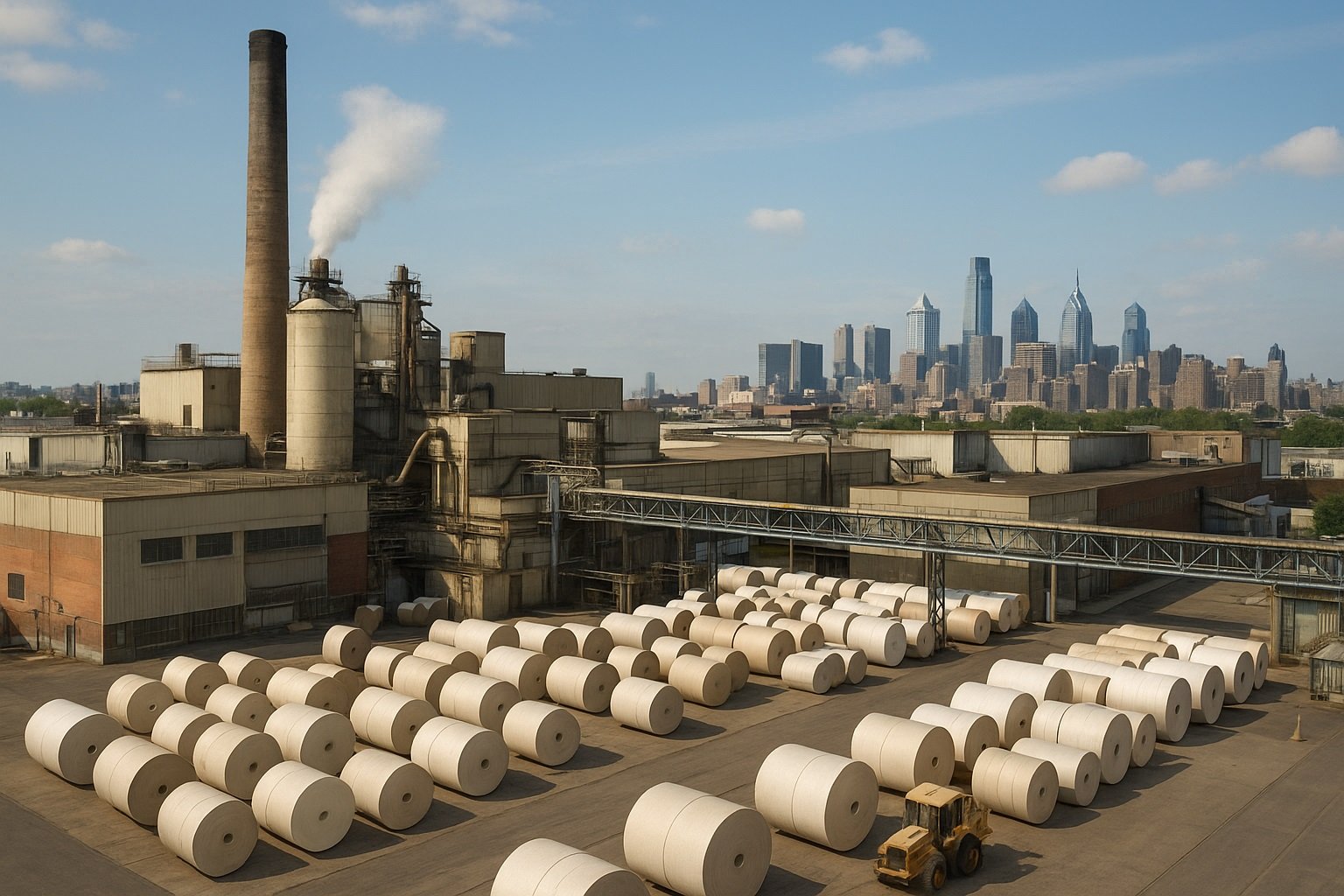
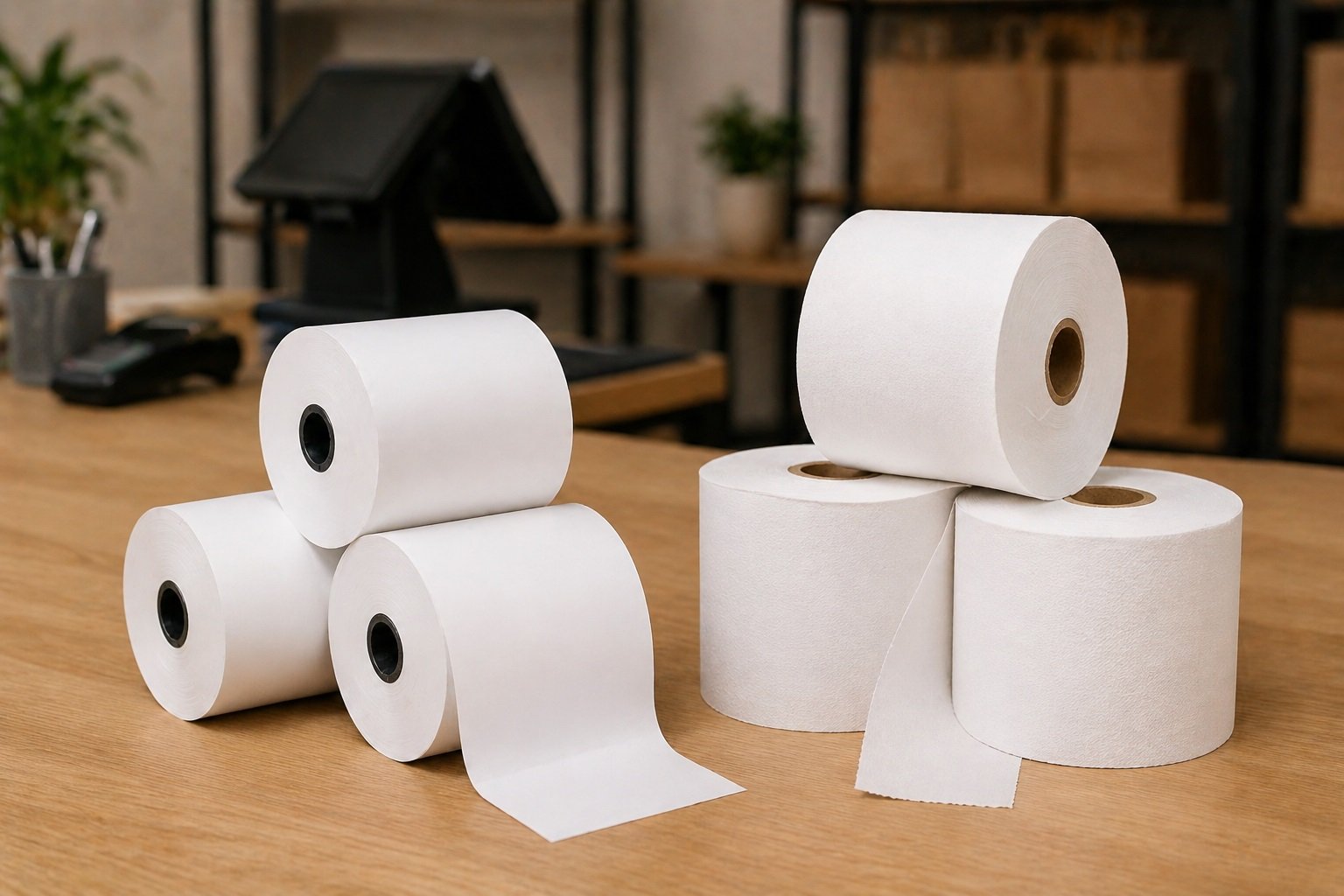
Philadelphia has always had a special relationship with paper. Back in 1690, William Rittenhouse built the first paper mill in North America. That single mill supplied the colonies with writing paper, helped printers like Benjamin Franklin keep the presses running. They laid the foundation for what would become one of the country’s earliest industrial strengths. Fast-forward three centuries, and the greater Philadelphia region continues to play a key role in producing high-quality paper. The line of production includes the specialized rolls that power today’s point-of-sale (POS) systems and credit card machines. While many of the historic mills evolved or closed, Pennsylvania’s paper industry remains robust. Modern facilities convert massive jumbo rolls into the precise sizes needed for everything from restaurant receipts to pharmacy labels. How Pennsylvania Paper Mills Keep Philadelphia Businesses Running Smoothly Today’s paper supply chain starts at mills across the state, many within a few hours’ drive of Philadelphia that produce premium base stock. These mills send jumbo rolls to specialized converting operations in the region, where they’re slit, rewound, and packaged into the familiar 3 1/8″ x 230′ or 2 1/4″ x 50′ rolls you load into your terminal. This proximity matters. When a weekend rush at a South Philly shop burns through cases faster than expected, local distributors can often deliver the same day or next morning. National online suppliers might take days longer and charge more for shipping. Choosing regional sources for POS paper and paper for credit card machines also means fewer supply-chain headaches, something every Philadelphia owner appreciates when the registers won’t stop ringing. Thermal Paper vs. Bond Paper: Understanding the Two Main Options Not all receipt paper is created equal. The two dominant types—thermal and bond—serve different equipment and priorities. Thermal paper is coated with a heat-sensitive chemical layer. When the print head in a thermal printer applies precise heat, the coating turns black to form text and images. No ink or ribbon required. That’s why thermal rolls dominate modern POS systems: they print faster, quieter, and with virtually no maintenance. Bond paper (sometimes called “impact” or “single-ply” paper) is traditional wood-free stock that requires an ink ribbon and a dot-matrix style printer to strike the page. You still see bond rolls in some kitchens (where oil and heat would ruin thermal receipts) or older systems that need carbon copies. Bond is tougher against grease and moisture, but prints slower and louder, and you have to change ribbons regularly. For most Philadelphia retailers and restaurants upgrading equipment in the last decade, thermal has become the default. It’s cleaner, faster, and far more cost-effective over time. Push for Higher Standards and Sustainable Materials One Pennsylvania mill leading the charge in quality and sustainability is American Eagle Paper Mills in Tyrone. Former employees and local investors after the original facility closed, American Eagle made a bold decision: become the nation’s largest producer of 100% recycled premium printing and converting papers. They invested heavily, in deinking technology, a natural-gas power plant that slashed greenhouse gases by nearly 70%, and water-recycling systems that cut usage by over 80%. Today the mill turns post-consumer waste into bright, smooth base stock that converters use for everything from office paper to the jumbo rolls that eventually become POS paper. All thermal POS paper comes directly from American Eagle. Their rigorous manufacturing standards—tight brightness controls, precise caliper uniformity, and dust-free production, influence the entire supply chain. Looking Ahead for Philadelphia’s Merchants Philadelphia’s paper story runs deep. The Rittenhouse mill once supplied the Continental Congress. Today, recycled jumbo rolls from modern mills support converters across the region. Philadelphia’s paper story runs deep. The Rittenhouse mill supplied the Continental Congress. Today, modern mills produce recycled jumbo rolls that support converters across the region. Next time you tear off a receipt for a customer, take a second to appreciate the journey that roll took: from recycled fiber in a Pennsylvania mill, through precise converting, all the way to your terminal. In Philadelphia, quality paper isn’t just a supply, it’s tradition.

Why Central Pennsylvania Businesses Choose recyclable printing paper
Computer Paper
ahmer

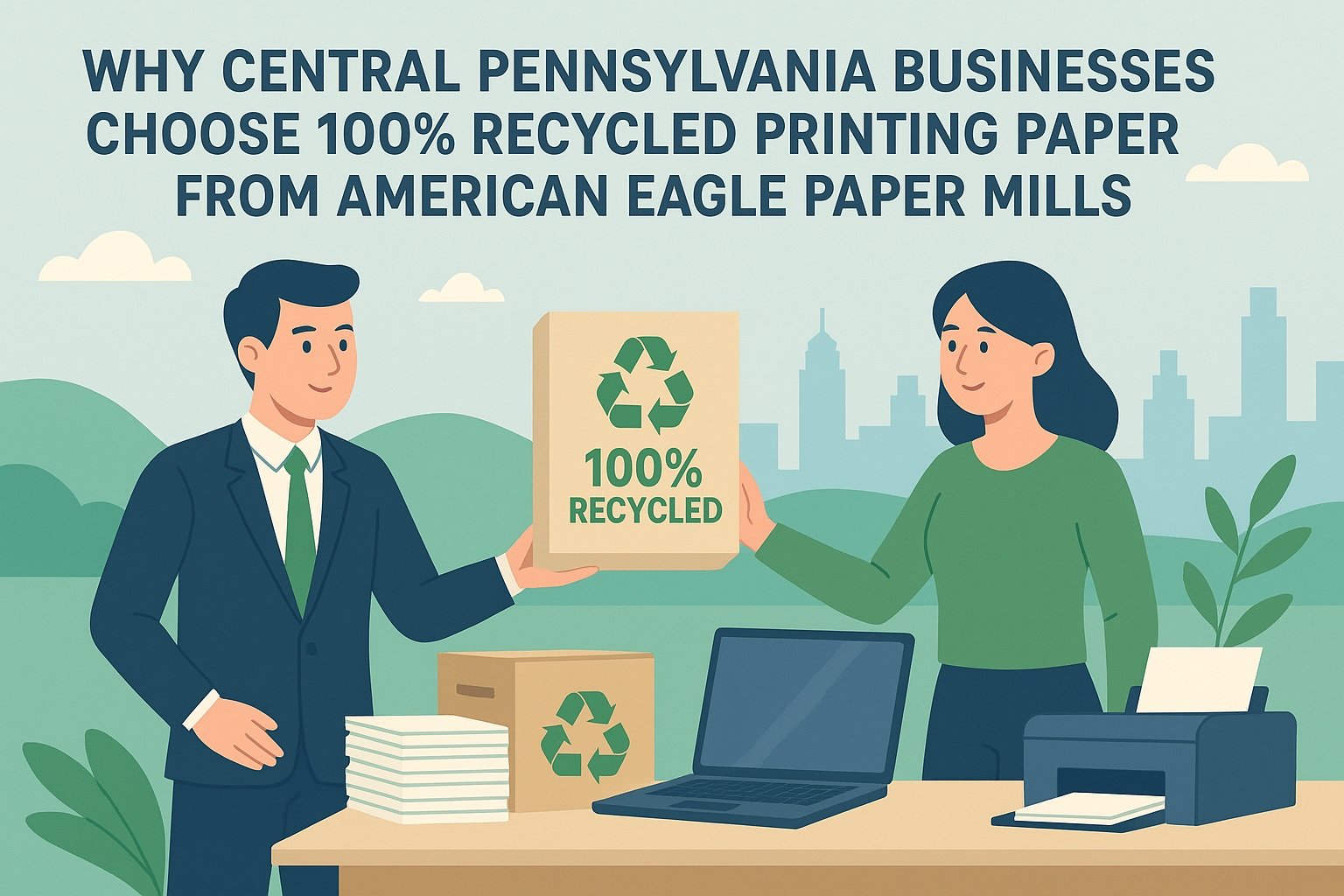
Why Central Pennsylvania Businesses Choose 100% Recycled Printing Paper from American Eagle Paper Mills

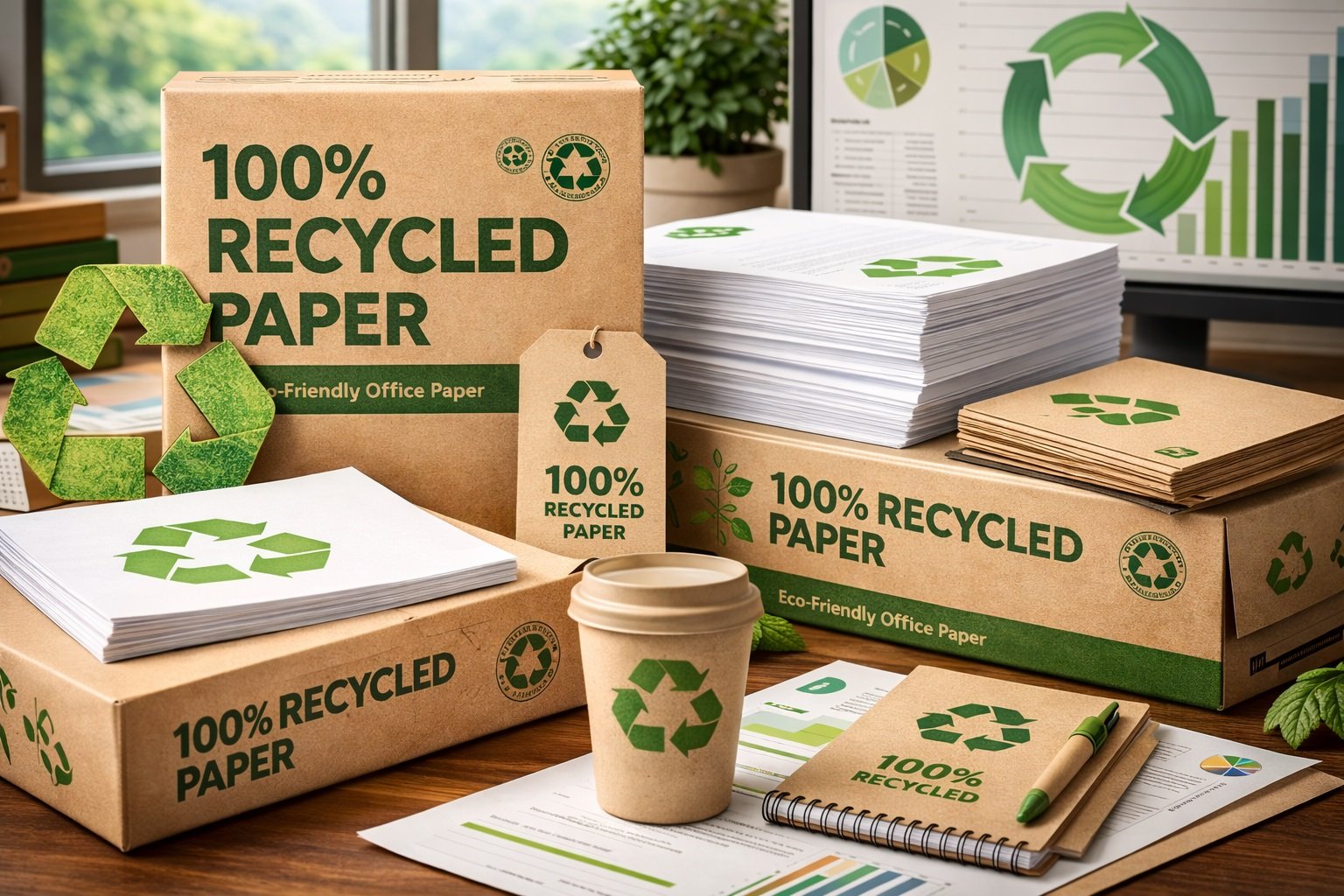
Recyclability has become more than just a trend. It has taken the role of redefining the operational models of the corporate world. Organizations of all sizes are aiming to reduce their environmental footprint through the principle of corporate social responsibility. Among such efforts, recyclable paper is a simple yet impactful step to promote eco-friendly values. Sustainable paper manufacturers, Tyrone, PA, actively producing 100% recyclable paper, are the most sought-after partners for modern businesses. These eco-friendly paper suppliers in Central Pennsylvania rely on recovered fibers from post-consumer and post-industrial waste as raw materials to fulfill all eco-goals. Moreover, with the help of recycling technologies, the paper’s quality, brightness, and efficiency are not compromised. They either deliver a similar or superior performance to a traditional paper. This proves that resource conservation and professionalism can closely collaborate. What does 100% Recycled Paper Mean? 100% recyclable printing paper from an eco-friendly paper supplier, Central Pennsylvania is a high-quality paper sourced from reusable and reprocessed materials. The recyclable option follows a closed-loop system in which used paper is collected, broken down, and again converted into a fresh product. However, this 100% alternative does not fall short in terms of its performance. Hence, the features of a 100% recycled paper include: Why Consider Recycled Paper Mills Pennsylvania? Environmental Reasons Resource Efficiency: As businesses have shifted their focus to reusable paper, the need for fresh wood pulp has significantly decreased. This strategy protects forests and their diverse species. Also, the procedures of the sustainable paper manufacturer, Tyrone, PA, reportedly save water and energy. Lesser Landfills, Fewer Emissions: Since the majority of waste is used up, fewer materials end up in landfills, where their decomposition produces methane. Additionally, the manufacturing emits a sparing amount of greenhouse gases. Supports Reuse: The recycled paper mill Pennsylvania promotes a circular economy. This system works with used paper fiber as an input. The materials move in a continuous cycle rather than being consumed and discarded once. Reduced Chemical Load: In contrast to primary wood pulp, the processes of reclaimed paper require limited chemical inputs, such as bleaching and pulping. The process minimizes air and water pollutants. Operational Factors Streamlines Supply Chain and Waste Handling Businesses can become part of sustainability-based programs and integrate related content into their disposal streams. Reputation and Stakeholder Aspect What are the Potential Challenges of Recycled Paper Mills Pennsylvania? Availability and Pricing In some areas, there might not be enough 100% recycled paper. Hence, the prices might be equivalent to or higher than fresh paper. The companies must work with other recycled paper mills Pennsylvania or combine various types for unique requirements. Perception and Performance Although all eco-friendly paper suppliers Central Pennsylvania have commendable papers, they specialize in specific applications. For instance, some have high-quality color printing, while others provide special finishes. Therefore, the companies should first identify their requirements and accordingly approach a sustainable paper manufacturer, Tyrone, PA. Certification and Verification It is always recommended to check the documentation and ensure credibility. However, eco-friendly paper suppliers in Central Pennsylvania provide different labels and certifications, which can be quite confusing. Request clear records and also obtain verifications from trusted third-party sources. Printing Compatibility Every printing appliance is compatible with certain paper properties. Businesses should check and ascertain that the stock is suitable with the printer, ink, finishes, and other methods. Communication the Transformation Once a company adopts recycled paper, it should promote the transition in its reports, as there is value in it. However, it should be done with care to avoid overstating the benefits, and they should be ready to confront any claims with evidence. Why Choose American Eagle Paper Mills? American Eagle Paper Company Inc. is among the eco-friendly paper suppliers in Central Pennsylvania that prioritize innovation and quality. You can choose from a wide range of paper products that fit your business’s needs the best. To know more about us, visit americaneaglepaper.com.

From Paper Mill to Table- The Lifecycle of American Eagle Packaging
Uncategorized
ahmer

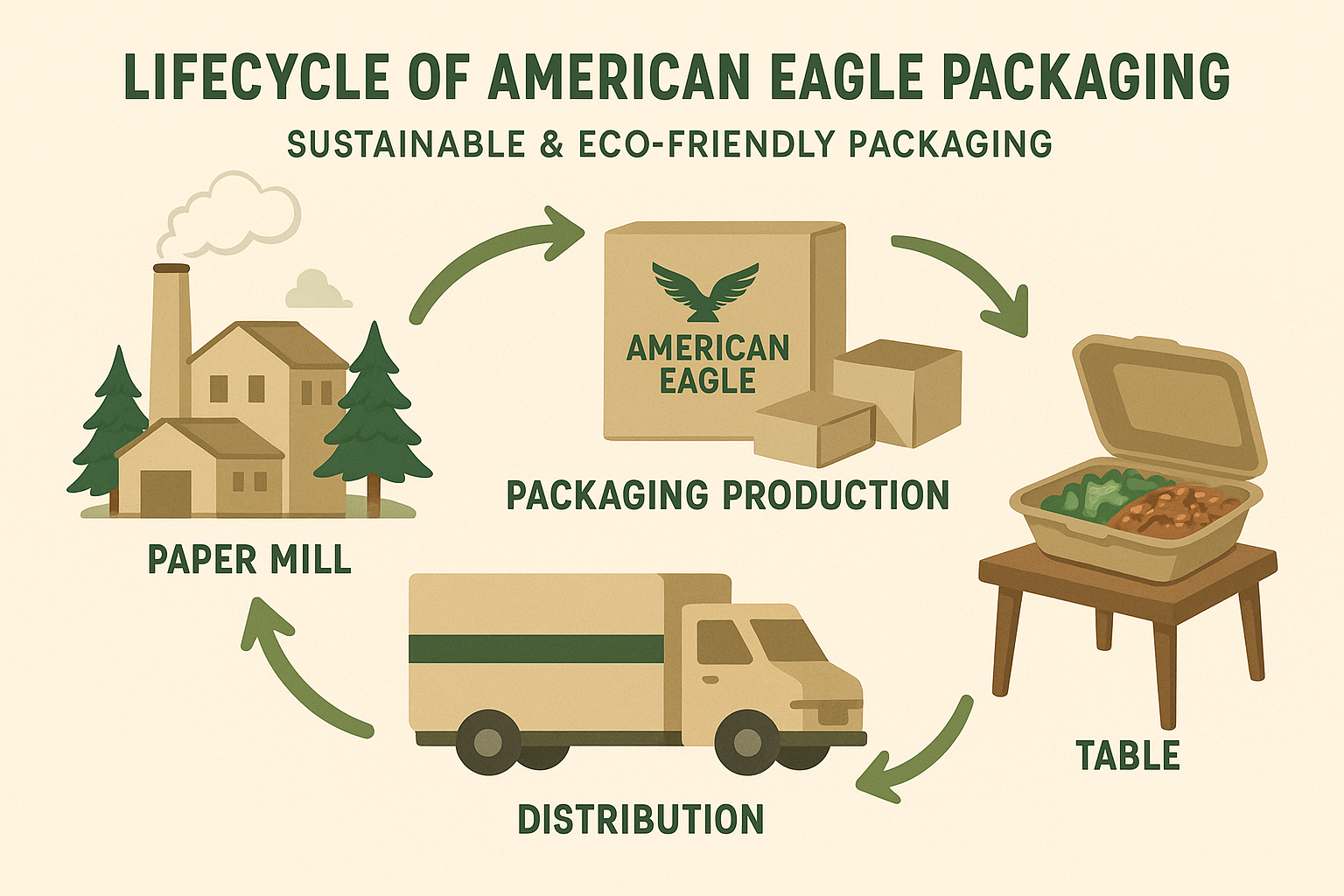
From Paper Mill to Table: The Lifecycle of American Eagle Packaging

In today’s consumerist, high-velocity economy, companies use packaging as the indispensable element of how they secure, package, and ship goods. A far too uncelebrated hero of the process is the humble pizza box. Which has a surprisingly convoluted path to your front door. To companies like American Eagle Paper Company, the life cycle of packaging is not merely a business function. It is a very engineered process that begins in the paper mill and ends at your table. Merging sustainability, precision, and purpose step by step. The Birthplace: Inside the Paper Company Every great pizza box begins in a paper mill, where raw materials are transformed into high-quality paperboard. With American Eagle Paper Company, the process starts with recycled material and sustainably sourced pulp. As a trusted paper company, they prioritize environmental stewardship without compromising on strength or usability. The pulp is cleaned, pressed, and dried into paper sheets that will someday become the basis of millions of packaging products. At this stage, we have already made decisions regarding thickness and durability. Especially if the final product has to withstand heat, grease, and transportation stresses, as in the case of pizza boxes. Using the Correct Grade of Papers in Paper Company After paper sheet production, the sheets then go through additional treatment to conform to varying packaging specifications. Not all papers are equal, and a pizza box must strike an ideal balance between insulation, folding, and environmental responsibility. American Eagle Paper Company engineers work with food customers to develop grades to satisfy both performance and regulatory standards. In addition to being food-safe grade, customers typically prefer that the box be brand-friendly. The surface must be able to support printed logos and promotional messages. For this purpose, they add coatings and finishes that render the surface ideal for printing colored, high-quality images without compromising the recyclable nature of the box. Cutting and Shaping the Paperboard Once the factory creates the perfect paper grade, the process moves into cutting and forming. Workers cut the large rolls into sheets of a manageable length. Afterwards, they are then die-cut into the forms we know as typical of a pizza box. They perform this task on high-speed equipment and with razor blades to ensure that each crease and fold fit together exactly for quick assembly. The firm takes pride in managing this stage as smoothly as possible. Punctuality is everything, especially when it comes to national restaurant chains that rely on standard packages to ensure product quality and branding. Printing and Branding the Packaging in Paper Company First impressions matter in a competitive market. The box is more than just a package. It is a billboard for the food-delivery company. Here, in this stage of the life cycle, the box passes through high-tech printers that add company logos, mottoes, and possibly even fun trivia or QR codes to facilitate interactive experiences. This is the most specialized part of the process that is reliant on client specifications. A few businesses opt for simple one-color prints to ensure cost-effectiveness, while others opt for full-color prints to deliver a message. With a business like American Eagle, which is very flexible, clients are provided with many printing options that can suit small and large batch orders. Folding, Gluing, and Final Assembly Now that the printing is completed, we convert the flat sheets into functioning boxes. Automated folding machines give the box its typical shape, applying glue where needed and scoring the folds for easy grip. This is a fast-moving assembly line, but keep an eye on the quality along the way for structural integrity. No customer wants a wobbly or collapsing box. For American Eagle Paper Company, every product has to pass durability tests that show the quality aspect of the brand image. Paper Company’s Distribution and Supply Chain Coordination After they assemble the boxes, they bulk the boxes and send them in bulk to customers across the country. That is where efficient supply chain management plays its part. They stack the boxes in batches to save space while still in their shape. They time deliveries to fit in with the aggressive schedules of food companies, which typically use just-in-time inventory. The Customer Experience at the Table When a pizza box finally arrives at the front door or dinner table of a person, few people think about its journey. All of it, however, from the fold of the lid to the piercing branding, is part of the customer experience. A box that keeps the food warm, retains the grease, and offers a clean, neat presentation enhances the meal and makes the restaurant look better. For businesses, this contact point is one of their last chances at a lasting impact. A well-designed box can enhance satisfaction among customers, promote repeat orders, and even create social media buzz when the box is image-retentive. Recycling and Return to the Paper Company The packaging life cycle is finalized when the packaging is recycled. A few pizza boxes, especially those covered with uncoated or lightly coated paperboard, are recyclable if they are not overly greasy. American Eagle Paper Company designs its packaging to be recyclable, closing the loop and reducing waste. Recovered fiber will eventually return to the mill, where it will start all over again in an environmentally friendlier form. In this way, each pizza box is not only a product but also a participant in a circular economy that benefits both the environment and the businesses that depend upon it. Conclusion From raw material to plate, the life cycle of packaging is a story of innovation, precision, and eco-friendliness. Step by step, American Eagle Paper Company ensures each box it produces meets the functional and branding needs of today’s businesses without sacrificing nature. Their high-quality products, like the dependable pizza box, are the result of decades of service as a leading paper company. For business ventures that seek to deliver value, reduce waste, and even better, improve your business credit via good vendor partnerships, it is a sound, strategic decision to

What is the Difference Between Recycled and Non-Recycled Janitorial Paper?
Janitorial Paper
admin

What is the Difference Between Recycled and Non-Recycled Janitorial Paper?

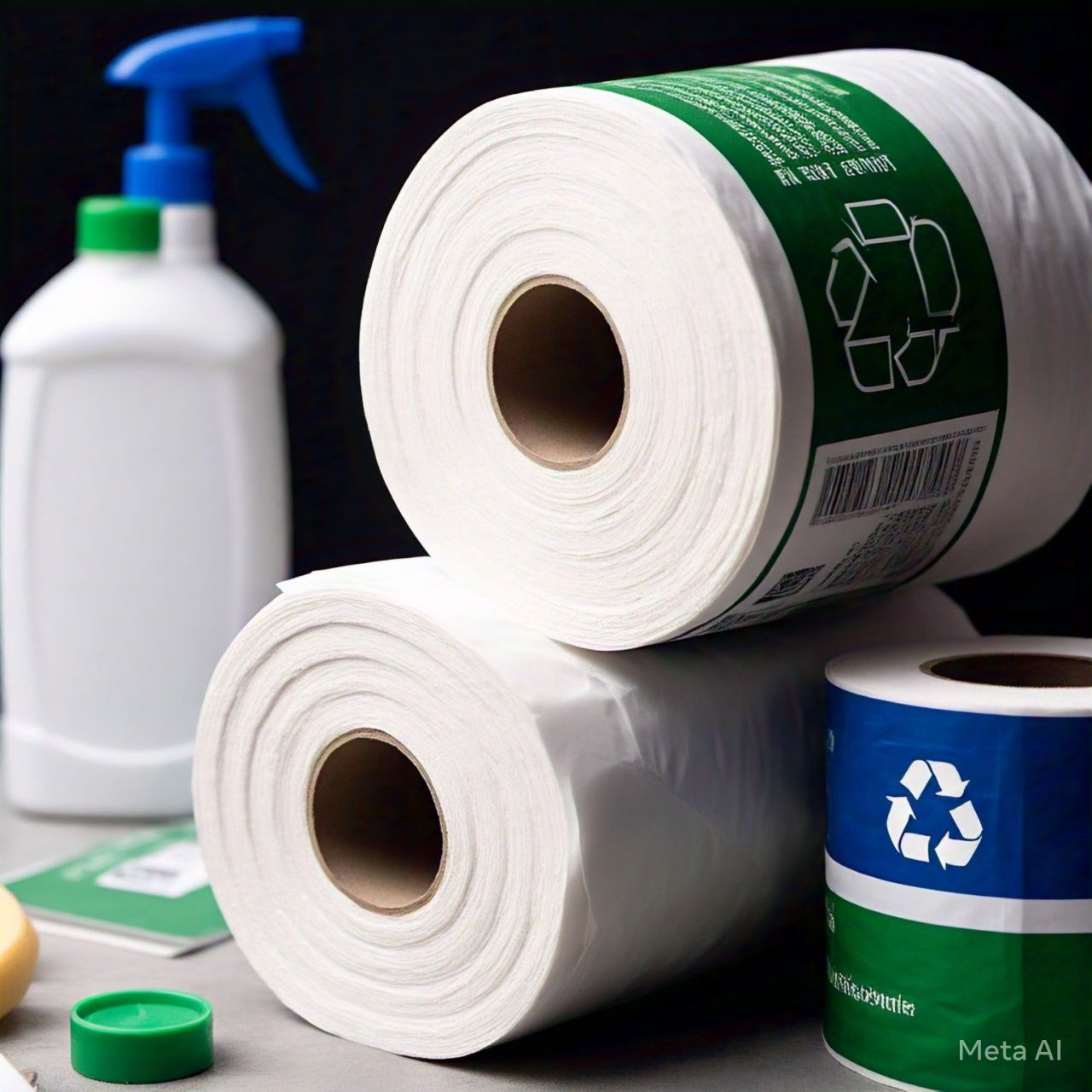
Difference between recycled and non-recycled paper for janitorial use Janitorial paper is a critical component in maintaining cleanliness and hygiene across various industries, from office buildings to healthcare facilities. While often overlooked, the type of janitorial paper you choose—recycled or non-recycled—can have significant implications for the environment, cost, and overall sustainability. This blog examines the key distinctions between recycled and non-recycled janitorial paper, looking at the ecologically friendly options for janitorial paper, the value of recycled paper for commercial cleaning, and what non-recycled paper means to the environment. Eco-Friendly Janitorial Paper Options Eco-friendly janitorial paper choices are made in a way to reduce the footprint on the environment while maintaining high performance. Recycled paper products are mostly at the front of these choices, typically consisting of post-consumer or pre-consumer waste materials. Since paper waste can be diverted away from landfills and also reduce the dependence on virgin pulp, recycled janitorial paper helps save natural resources and energy. FSC, EPA Guidelines, and Green Seal are only a few certifications that ensure that such products conform to the very high environmental and sustainability standards of production, ensuring companies seeking to lessen their ecological footprint have a more reliable choice. Benefits of Recycled Paper for Commercial Cleaning There are various benefits that recycled janitorial paper has for commercial cleaning operations. For one, it helps in conserving the environment by lessening deforestation while minimizing energy-intensive processes related to virgin paper production. Modern day-products made of recycled paper are engineered to be just as effective as non-recycled paper products, providing strength and absorbency for different cleaning operations. In addition, companies that use recycled paper find it fits into the corporate social responsibility agenda and boosts their reputation among environmentally conscious consumers. Cost savings can also be realized, especially when purchased in bulk, making recycled paper a practical and sustainable option for commercial settings. Sustainability in Janitorial Paper Products Sustainability has become a priority in the janitorial supply industry, and janitorial paper products play a key role in achieving this goal. The production of recycled paper requires significantly less water, energy, and chemical processing compared to virgin paper. By using recycled paper, businesses contribute to waste reduction and lower greenhouse gas emissions, as paper that would otherwise end up in landfills is repurposed into functional products. Many companies are adopting sustainable janitorial paper products that require building certification but also help reduce the carbon footprint and appeal to stakeholders’ conscious approach toward a green environment. Sustainability in janitorial paper is no trend. It’s a vital step toward that greener future. Environmental Impact of Non-Recycled Paper Fresh wood pulp is used for non-recycled, or virgin paper. Non-recycled looks fresh and clean, yet its production at a significant cost to the environment. Manufacturing such paper contributes to deforestation which affects ecosystems and reduces the sequestration abilities of the Earth. Furthermore, virgin paper utilizes more energy and water than recycled paper. Chemicals used in bleaching and processing can be toxic to the environment surrounding the production site, making it another site of ecological degradation. In addition, non-recycled paper waste is significant in volume, often ending up in landfills, where it is a source of methane, an extremely potent greenhouse gas. While virgin paper has its place in certain applications, its use at large scale raises significant sustainability concerns. Cost Comparison: Recycled vs. Virgin Paper Products A common misconception is that recycled janitorial paper is significantly more expensive than virgin paper. However, advances in recycling technology and increased demand for sustainable products have narrowed the cost gap. Recycled paper may have a slightly higher upfront cost in some cases, but it often results in long-term savings through reduced disposal costs and potential tax incentives for adopting sustainable practices. On the other hand, virgin paper, while sometimes cheaper initially, incurs hidden environmental costs that can affect businesses in the form of regulatory penalties or in terms of their reputation. If taken into account are the direct costs and environmental factors, then recycling paper usually appears to be cheaper and more eco-friendly. Correct Janitorial Paper Selection Choosing the appropriate janitorial paper requires balancing the considerations of environmental responsibility, performance need, and budget. Businesses seeking to maintain the highest levels of sustainability have been looking to recycle paper products. They are designed to meet both ecological requirements and reliable performance expectations, and recent advances in this product category now offer excellent alternatives for most cleaning applications. For a reliable janitorial paper provider, The American Eagle Paper Company is an excellent provider that offers a whole range of options starting from traditional to green solutions. Strongly dedicated to sustainability, they present their consumers with products that will ensure the most preferred high-quality recycled paper in accordance with the requirements of environmental protection. This helps businesses to take good care of the environment and serve with the highest cleanliness standards.